BIAFRA OUR DEFAULT HOMELAND - A Book Blog

This blog is a Book Blog. The entire blog is about a book titled BIAFRA OUR DEFAULT HOMELAND written by me. The book is comprised of seven chapters, the Prologue and the Epilogue.
THE BOOK IS AVAILABLE FOR PURCHASE, ALONG WITH MY OTHER BOOKS, AT
1. LULU PUBLISHING: lulu.com/spotlight/ccnweze - Paperbacks and ebooks
2. OKADA BOOKS: https://okadabooks.com/user/C.C.Nweze - ebooks only
READ, ENJOY, UNDERSTAND, DECIDE

-----------------------------------------------------
Biafra Our De
Celestine Chukwuma Nweze
Dr
C. C. Nweze
The
True Vine Clinic
184 Agbani Road
Enugu
E-mail: ccnweze@gmail.com
Website: Fountain of Reason
(fountainheadrepository.com)
First Published January 2018
All Rights Reserved
No part of this publication
may be reproduced, stored in a retrieval system
or transmitted in any form or by any means, electronic, mechanical,
photographing, recording or otherwise, without the written permission of the
author.
DEDICATION
To Eva
My elder brother Evarist Chiebonam
Nweze (we fondly called him Eva). He was a Biafran soldier who survived till
the end of the civil war in 1970. We got an eye witness confirmation that he
died at Ohafia on that day the war ended. He and other Biafran fighters were
home-bound. What happened is a pathetic story. It was later revealed that the
incident happened because Yakubu Gowon, who was the Nigerian Head of State, had
ordered the Nigerian troops to overrun the remaining parts of Biafra in spite
of the Agreements and the declaration of the end of the war; Biafra had
demobilized her fighting forces, command and structure dismantled. Nigerian
troops in this Ohafia sector obeyed.
Post
Script: Yakubu Gowon has confirmed there
was a plan by the Nigerian Army to run over the whole of Biafra immediately the
war ended. He, however, said he was the one that called off the action, when he
found out about it within 24 hours the war ended, through an order he gave to
General Domkat Bali which was obeyed. He said this during the 80th Birthday
celebration for Bali on Saturday, 29 February 2020. “We owe Domkat Bali a lot for averting what
would have been a genocide by the Nigerian Army during the civil war…” He said. (See This
Day, 1 March, 2020). This means he, the Commander in Chief, was not
aware of it while it was reported he was the one who ordered it. Many such
scenarios played out during that civil war. It seems some commanders in Ohafia
got Domkat Bali’s call-off order rather late or had started the action without waiting for a confirmatory command from Domkat Bali who it was that rather informed Gowon, the Commander-in-Chief.
PROLOGUE
Enigmatic is Elephant - so hugely
charismatic.
Plain, yet not emphasizing his
striking merits.
Intimidating credentials do speak intimidation
Naturally, factually, by no means
intentionally.
So it is and that I truly am,
breathing no word.
Customized for Service are those
endowments
Adoring or abhorring shall bring on
no change
To the seed and due season, as
heavenly fated.
I am Elephant! Your heart sees like
your kind;
Divine architecture shan’t ever
serve a vile end.
I blaze the trail in the thick,
easing tread for all
My back lifting over, my tongue
plucking away
I eat no flesh and my presence
guards the weak
But Lion, Terror to the Savanna, they
call King.
For sacking hordes of gazelles, wasting
zebras?
I reach out to grassland, forest,
creeks, vast sea,
Hurting none, yet branded with tart
negativity!
Not with fitting acclaim and credit
duly earned.
Naked conspiracy, evident envy and
contempt.
Big Heart moves on, in zero spite,
amity for all.
“Asserts he’s the biggest, claims
elite ancestry”
Gospel truth it really is; here’s
the bigger truth:
Larger than all beings was an
eminent forebear.
Mammoth was an elephant, anyone any
close?
My name I’d proudly bear, even
still leaguing.
Qualities scream it loud, humbles
wicked ogre.
He gnaws in fury: a deep lasting
sad inventory.
Atrocious system, fiends do get
away with evils.
I look on with my neighbors,
weighing options;
I’ll stay, only in Sane Structure,
if they behave.
Table of Contents
1. THE BONA
FIDE HOMELAND
2. HISTORICAL GEOGRAPHY
3. THE CONTEMPORARY TIMES
4. IDENTIFICATION WITH HERITAGE
5. THE NIGERIAN IDENTITY
6. BIAFRA AND POLITICS
7. THE
FUTURE
1. THE BONA FIDE
HOMELAND
The whole human race was then created to live throughout all the earth and populate all parts of it. In God’s original plan, before man was created, existed the concept of “nation”. He created nations and fixed the time and boundaries of each one:
“From one stock he created the whole human race to live throughout all the earth, and he fixed the time and the boundaries of each nation” (Acts 17: 26)
It is God’s plan, therefore, that different nations should exist, occupied and owned by different people, according to the distribution parameters preset by Him. It is then expected that each nation should be unique in some way since each is different from the other.
It may immediately seem that each nation into which each person is born necessarily becomes his own divinely-assigned nation, to permanently own. It is actually not so as movements of peoples are continually taking place.
Mass movements and transmigrations have been seen over the years resulting in people making their homes in different nations at different times. For instance, some people emigrate to other countries from their home country, settle down and naturalize in such countries and become citizens of their new country. They give birth to children in such homelands and their children grow up there as citizens of such homelands which they see as their own and which are legally so.
These people still identify with the country of birth as citizens even while they have rights as citizens of their second country. Their children who may not have ever lived in their fathers’ primary homeland still identify with it as their original homeland.
People
like Alex Iwobi, Ola Aina, Carl Ikeme and some other young lads, who are
English and are playing football in England have chosen to play for the
Nigerian national football team over the English national team, more strongly
identifying with their root homeland Nigeria, just like Leon Balogun, the
German-born Nigerian and William Troost-Ekong the Netherland-born Nigerian, who
also have strong sentiments in favour of playing for Nigeria.
With regard to national sentimental feelings and natural affinities, it would be interesting to discover which homeland has the upper hand in the lives of such people with dual nationalities. Judging right away with the afore-mentioned footballers, their expressed sentiments are instructive:
Leon Balogun: “But this is a very good question because as I said, in video games I always prefer Nigeria, I also had dreams of playing for the Super Eagles one day, of course with the successes in Nigeria, in Germany you see better opportunities.” – Daily Post, September 4, 2017
Carl Ikeme: “Definitely. I’ve always been really close with the Nigerian side of my family. I always felt Nigerian. If anybody asked me I’d tell them my parents are from Nigeria, but I suppose being part of the squad and going to Nigeria hopefully more in the future will give me more sense of the culture. It’s difficult to be involved deep in the culture when you’re brought up in England, but going back to Nigeria a lot more will bring me a lot closer to that, and I’m looking forward to spending more time in Nigeria. I actually prefer to play international games in Nigeria than in Europe. You just get a better sense of the atmosphere and the people.” – Fifa.com, 16 November, 2016.
Ola
Aina: “. . . so when the opportunity came to switch to Nigeria I grabbed it
with both hands and though it’s still early days yet but I’m enjoying myself
here and I hope to be with the Nigerian team for a long while to come.
“The players have shown me love. Everyone has been especially kind to me since I joined up that it’s hard to believe that I’ve not known them all my life”. Daily Post 8 September, 2017.
Similar sentiments and affinities are usually expressed by other multiple nationality persons and they predominantly prefer to have more love for homelands that are their earlier roots although their present homelands usually present better living and better life opportunities for them. Their current homelands, prosperous as they may be, usually look, in their psyche, like the artificial homeland. Synthetic products are usually much more beautiful but the originals are usually more cherished. It is innate in man, through a Divine arrangement, to regard the earliest-known root homelands as the original, the genuine, the real, the legitimate, the bona fide homeland.
It is a Divine arrangement, evidently, because these sentiments and affinities for the bona fide homeland are largely spontaneous in people. Yes God had fixed a nation for them before they were created and he also fixed this nation for them in terms of time and boundaries (cf. Acts 17: 26). This means that God had determined the time when a certain place with certain boundaries would become the designated homeland of some people. Although their forebears might have migrated from many places over the years the one regarded as the root homeland is the earliest identifiable enclave where family and ancestral presence has been established. Such final destination (at least final in that age) would seem to correspond to where God established the bona fide homeland.
This is how it happened in the case of Israel as contained in the command of God to Abraham at Haran, his then homeland. He was ordered to move to the one he designated as their bona fide homeland – Canaan.
“God said to Abram, "Leave your country, your family and your father's house, for the land I will show you. I will make you a great nation. So Abram went as God had told him, and Lot went with him”. (Gen. 12: 1)
Canaan is still the homeland where his descendants, notably Israelis, have continued to cherish, return to or live in till date. Scattered all over the earth, Jews have acquired many different nationalities but they keep on identifying with The Jewish Homeland of Israel and sometimes necessarily returning thereto, as seen after World War II, following The Holocaust. Israel is the Jewish bona fide homeland.An interesting deduction from the ongoing is seen in the ever-increasing wave of root identity consciousness all over Nigeria. There is a very loud desire in many parts of Nigeria for self-realization and self-determination. Unfortunately this consciousness is being awakened and fueled by the badly frustrating years of misrule sadly occasioned by ineptitude, nepotism, manipulative marginalization of parts and oligarchic hegemony that seems to be benefitting a dubious few.
Unfortunately too, this consciousness which has led to widespread sensible agitations for restructuring that is falling into deaf ears, is consequently graduating to agitation for secession in some parts of Nigeria with attendant grave consequences that showcase the Federal leaders’ very poor or none-existent statesmanship and crass intolerance, mostly showing the very hallmark of hate. A graphic example of this is seen in the handling of the agitation for self-determination for the indigenous peoples of the enclave called Biafra, in the South-eastern part of Nigeria.
Agitations for self-determination are going on in other parts of Nigeria, especially the South West, and these have the exposition of the effects of the seriously heightening root-homeland awareness, a consciousness that is laden with love, patriotism and great hope, with urgency brought into it by the very poor and highly unacceptable state of polity in Nigeria. The South West is agitating for the state of Oduduwa (Oodua).
The choice of Oduduwa reflects the sentiment attached to the origin of a people; Oduduwa is the name of a rather deified character who became the first Ooni of Ife and the direct line ancestor of all legitimate Yoruba crowned kings. Oduduwa’s kingdom was the primal Yoruba kingdom and his sons and grandson founded all the Yoruba kingdoms in Nigeria and Benin Republic (Ketu Kingdom); Oduduwa’s last son, Oranmiyan, was first an Oba of Benin, on invitation, who left his son Eweka in Benin to continue the Benin dynasty while he went on to become the first Alaafin of Oyo and later became the sixth Ooni of Ife. Oduduwa’s Oyo empire extended from the pre-confluence River Niger to the River Volta, essentially covering the whole of present-day South-Western Region of Nigeria. It can be seen that the Oduduwa heritage is a great one worth being proud of. Further exploration will reveal that the Oduduwa energy, intelligence, creativity, foresight and sublime tradition and culture are inherent in Yoruba people and still readily observed, and obviously being wasted in a Nigeria that is not productively structured. It is not surprising the sentiments of Yoruba people lie with their revered bona fide homeland of Oduduwa.
The same cannot be said, in terms of historical knowledge, about the South Eastern Nigeria where many people do not know why Biafra was the name given to the country resultant from our secession from Nigeria in 1967 (re-integrated into Nigeria in 1970). That is why a good number of people who are indigenes of Bayelsa, Cross River Akwa Ibom and Rivers States in the South-South region of Nigeria and a few in the South-East would say they are not Biafrans while the whole of the Eastern Region, which includes all these states, is sitting directly on the Bight of Biafra which is the body of water lined by the shores of the Eastern Region.
They
do not know the relevant history. They do not know that Biafra is their bona
fide homeland. There is no homeland that centrally belongs to all the
nationalities in the Eastern Region except Biafra. This is the
only name that can be chosen by all in the Eastern Region, automatically or
without active consideration, due to lack of a viable alternative. That
is why Biafra is not only our bona fide homeland but is, in fact, our default
homeland. This can easily be seen in Africa’s Historical Geography.
2. HISTORICAL GEOGRAPHY
There is no homeland that centrally belongs to all the
nationalities in the Eastern Region except Biafra. Biafra is one of the three
homelands that can be traced to history as comprising the exact area now known
as Nigeria. The other two are Zanfara and Benin. This can be seen in maps
available in as early as 1584. Looking at the early maps it can be clearly seen
how Zanfara covers the area of present Northern Nigeria, how Benin covers the
area of present Western Nigeria including the former Mid-West, and how the
whole area of the present Eastern Nigeria, including Anambra State, Akwa-Ibom
State, Bayelsa State, Cross-River State Delta State, Ebonyi State, Enugu State
and Rivers State is covered by Biafra. West Africa zoom-in is shown alongside
each full map of Africa.
Historical maps exist, that show wonderful early precise documentations of existence of civilizations organized into various named homelands some of which were large and powerful kingdoms. One of the large kingdoms documented by cartographers is Biafra
These
maps have been preserved in their original forms in various important locations
most of which are prominent libraries mostly in prestigious world universities.
These maps have been located in these famous sources and arranged
chronologically up to the present. The
sources of these maps on display here are: 1. Princeton University Library, New
Jersey USA, 2. James Ford Bell Library, University of Minnesota, USA, 3.
Michigan State University Map Library, USA, 4. The Bodleian Libraries, Oxford,
United Kingdom, 5. The Philatelic Database (www.philatelicdatabase.com/) 6. David Rumsey Map Collection Cartography Associates (www.davidrumsey.com), 7.
Stamp World History (http://www.stampworldhistory.com/country-profiles-2/africa/biafra/
)
Historical maps
easily show that the homeland called Biafra existed a very long time ago in
history and was a major civilization in West Africa and maintaining that name
in maps until late 19th century, following the Berlin Conference (15
November 1884 to 26 February 1885) after which European countries shared up
Africa and gave different names to their own share of African lands, overriding
the autonomy of those great kingdoms and their age-long identities. A number of
African nations are already trying, as much as possible, to regain their lost
identities, and recover the names of their cherished bona fide homelands, by
going back to history and identifying their roots and the real names of their
bona fide homelands.
16th Century:
1584 Map 1

1584 map Ortelius, Abraham, “Africae tabula noua.” From Ortelius’s Theatrum orbis terrarum Antwerp, 1584, [Historic Maps Collection: https://libweb5.princeton.edu/visual_materials/maps/websites/africa/maps-continent/1584ortelius.jpg

SOURCE: Princeton University Library
This standard map of Africa for the last quarter of the sixteenth century is from Abraham Ortelius (1527-1598) who lived and died in Antwerp in Northern Belgium, where he had a bookselling business.
The Portuguese pronounced Biafra as Biafar and that is what is written in those very early maps like this one. Some other Europeans called it Biafara and Biafares perhaps depending on the Europeans’ language and nationality. It was corrected to Biafra before long and it is still Biafra till date
Obviously a map drawn in 1584 cannot be accurate according to the modern standards of cartography. But it can be said to be accurate according to the standards of the time as the cartographers used information obtained from European travelers and explorers to make their maps. They did an incredibly good job, given the facilities available to them, in comparison with the technology of now. This is because, inaccurate as they obviously are in comparison with today’s maps, they wonderfully correlate with, and can easily be accurately extrapolated to confirm, present realities. Naturally, the maps kept getting better over the years.
17th
Century:
1644 Map 2

1644 map Blaeu, Willem Janszoon, 1571-1638. “Africae nova descriptio.” (Amsterdam, 1644). Gift of J. Monroe Thorington https://libweb5.princeton.edu/visual_materials/maps/websites/africa/maps-continent/1644%20blaeu.jpg

SOURCE: Princeton University Library
Described as “one
of the most decorative and popular of all early maps of Africa, from the
‘golden age’ of Dutch mapmaking” by the Princeton University Library, this
beautiful map of Africa with fine engraving and coloring was produced by Blaeu,
Willem Janszoon (1571-1638) and shows the three kingdoms that occupied the
space now known as Nigeria. Here Biafra is written as Biafara by the Dutch
cartographer (note that all the depicted ships were assigned Dutch flags).
“Side panels depict costumed natives from areas visited along the coasts. The
interior is decorated with exotic animals (lions, elephants, ostriches), which
were (and still are) a major source of fascination for the public” comments the
Princeton University Library. This shows the travelers and explorers observed a
good level of civilization in these areas, which include Biafra.
1686 Map 3

1686 Map: 17th Century, Western and Central Africa Dapper, Olfert, 1639-1689. Description de l'Afrique, contenant les noms…, leur A Amsterdam : http://umedia.lib.umn.edu/node/1297910
SOURCE: University
of Minnesota Library
This is a watershed map physically located
at the University of Minnesota Libraries,
James Ford Bell Library. https://www.lib.umn.edu/bell,
produced in 1686 and seems to have become known in 1707. Largely maintaining
the hitherto landmarks and relationships, it reveals Biafra city as a city that
is most probably the capital of, or the most important city in Biafara Regnum
(Biafara Kingdom) which still covers the whole of what is now the Eastern part
of Nigeria starting from the east bank of the river that would be subsequently
identified as the River Niger and be discovered to be continuous with the big
northern, west-east directed river to form the whole extent of the River
Niger. Biafara Kingdom covers the
present Cameroun and further extends down to the area of present day Gabon and Equatorial Guinea. The map was either made by, or from the descriptions of, Olfert Dapper
(1636 – 1689 a Dutch writer); it is credited to him.
18th
Century:
1710 Map 4

1710 map Moll, Herman, d. 1732. “To the Right Honourable Charles, Earl of Peterborow and Monmouth, &c.” [Historic Maps Collection]: https://libweb5.princeton.edu/visual_materials/maps/websites/africa/maps-continent/1710%20moll.jpg

SOURCE: Princeton University Library
A colorful map made by Herman Moll (1654-1732) a German who lived most of his life in London where he established a book and map store. He made his maps by studying the works of other cartographers. It is not easy to say whether that is why his map of Africa seems less accurate than others although the relationships are still fairly retained. All the other maps before his were consistent. Instead of “Biafar” he calls Biafra “Biasar” and he recognizes Biafar city at the eastern bank of River Cameroons.
1737 Map 5

1737 map Hase, Johann Matthias, “Africa secundum legitimas . . .” https://libweb5.princeton.edu/visual_materials/maps/websites/africa/maps-continent/1737%20hase.jpg

SOURCE: Princeton University Library
This is a map from Johann Matthias Hase (1684-1742) a German mathematician, astronomer and cartographer. Hase identified important kingdoms and territories in colour and dotted lines and Biafara is one of them. Biafra was a very great kingdom with significant civilization.
For the rest of the century the map did not change significantly. Biafara remained the name used for Biafra and it continued to be shown as a major territory in West Africa extending to the western part of Central Africa.
Zanfara Kingdom had disappeared from the map and Benin Kingdom was dwindling in prominence. Zanfara kingdom had just been conquered by the Gobir kingdom, under King Babari, which had established its capital at Alkalawa, their Gobir kingdom reaching its height under the reign of King Bawa Jan Gwarzo (1771-1789) in the late 18th century and ending in early 19th century when it was conquered in the Fulani War (Fulani Jihad, of Usman dan Fodio) of 1804–1808, which resulted in the creation of the Sokoto Caliphate headed by Usman dan Fodio himself
It has to be noted how very restless the northern areas of West Africa were before 19th Century: multiple wars and conquests, aggressions with military expeditions, and territory grabs in diverse directions. For instance, Zanfara Kingdom sacked Kebbi Kingdom and took control of it, moved against Katsina, another Hausa Kingdom, and took it over and was itself conquered by Gobir kingdom as already noted, and Gobir itself was conquered by the Fulani who also killed Yunka the king of Gobir. These were warlike people who were preoccupied with military conquests and control of other nations. These hegemonic and warlike traits are still alive in the Far North of Nigeria.
The attributes of the Oduduwa descendants discussed earlier is still alive in Yorubas and Binis. Graceful monarchy characterizes this area of great vision.
In
sharp contrast the nations in the Biafra kingdom were peaceful, industrious
people preoccupied with local and international trade, and development. They
intelligently interacted with foreign travelers and explorers and cooperated
with them to advance trade and industry, and promote education. They put their
coastal location to appreciable benefit. This trait is still very much alive in
the eastern part of Nigeria, especially among the Igbos.
19th Century:
1804 Map 6

1804, Map. Africa. Compendious Geographical Dictionary. Michigan State University Library. http://archive.lib.msu.edu/maps/MSU-Scanned/Africa/300-A-1804Compendious.jpg

SOURCE: Michigan State University Map Library
1805 Map 7

1805 map Cary, John, ca. 1754-1835. “A New Map of Africa from the Latest Authorities.” From Cary’s New Universal Atlas (London, 1808). https://libweb5.princeton.edu/visual_materials/maps/websites/africa/maps-continent/1805%20cary.jpg

SOURCE: Princeton University Library
By early 19th century Biafara was already being properly called Biafra perhaps due to a better understanding by the foreigners who happened to be the writers and producers of the maps. Biafra has remained the name of that homeland till today. Bight of Biafra had also appeared in the map and remained till date except in maps produced by those who respect the unfortunate local Nigerian decree of 1975 renaming it to Bight of Bonny.
Unfortunate was this renaming because of the aim of it that was to delete Biafra from the map and, therefore, from the consciousness of Nigerians, following the civil war that occurred, 1967 to 1970, as a result of the declaration of the secessionist state of Biafra; the aim of it was to remove the memory of the war from mainstream consciousness of Nigerians. This is a mistake because thus removing the war from Nigerian consciousness prevents future Nigerians from also having the awareness of the horrors of the war, the causes and the consequences, thereby condemning them to the possibility of repeating the very mistakes that led to the war, or similar mistakes.
For the rest of the 19th Century, observe the evolution of these historical maps and be educated on the striking developments in Biafra over the years, until the years following the Berlin conference when identities and the autonomy of nations were removed by the colonizers. Thereafter, identities of the kingdoms of Biafra and Benin continue to be preserved by the significance of the names of the two bights on which they are sitting, which are lined by the entire coastline of Nigeria. These are Bight of Benin and Bight of Biafra, also containing islands therein.
1810 Map8

Africa. By Cooper. Published in London by R. Phillips in 1810. Michigan State University Library. http://archive.lib.msu.edu/maps/MSU-Scanned/Africa/300-A-1810Phillips.jpg

SOURCE: Michigan State University Map Library
1841 Map 9

Africa. By Samuel G. Goodrich, George W. Boynton, and Charles D. Strong. From General Atlas of the World. no. 49, http://archive.lib.msu.edu/maps/MSU-Scanned/Africa/300-a-1841-300.jpg

SOURCE: Michigan State University Map Library
1849 Map
10

French map of the Gulf of Guinea from 1849. The Bodleian Libraries, Oxford https://wiki2.org/en/File:Gulf_of_Guinea_Guillaume_Lavasseur_de_Dieppe_jpg
French map
of the Gulf of Guinea from 1849. The
Bodleian Libraries, Oxford
This 1849 map is
important for its simplicity. Only very important landmarks are indicated. The
three most important kingdoms in that part of West Africa are indicated in the
map. One of the three is Biafra.
1867 Map 11

1866, Africa, from Mitchell's School Atlas "Map of Africa" in Mitchell's school atlas : Philadelphia: E.H.Butler and Co.,1866, c1865. http://img.lib.msu.edu/branches/map/AfJPEGs/30_g1019m67_1867_l.jpg

SOURCE: Michigan State University Map Library
1871 Map12

Africa and Cape Colony Map (Gall and Inglis 1871). The Philatelic Database: http://www.philatelicdatabase.com/africa/africa-and-cape-colony-map-gall-and-inglis-1871/

SOURCE: The Philatelic Database (www.philatelicdatabase.com/)
1874 Map
13

1874 Map, Africa. Gray, Ormando Willis. David Rumsey Historical Map Collection. Philadelphia. Gray's Atlas Map of Africa, https://www.davidrumsey.com/luna/servlet/workspace/handleMediaPlayer?lunaMediaId=RUMSEY~8~1~206913~3003061

SOURCE: David Rumsey Map Collection, Cartography Associates
1880 Map 14

1880 Map. Andriveau-Goujon, E. (Eugène), 1832-1897. “Carte générale de l’Afrique, d’après les dernières découvertes…” https://libweb5.princeton.edu/visual_materials/maps/websites/africa/maps-continent/1880%20andriveau.jpg

SOURCE: Princeton University Library
1890 Map 15

1890 Map. The Philatelic Database,
http://www.philatelicdatabase.com/wp-content/uploads/2008/05/africa-map-1890.jpg

SOURCE: The Philatelic Database (www.philatelicdatabase.com/)
Five years after the Berlin Conference, the scramble for Africa by the European countries of the conference has advanced. Many of the regions containing autonomous indigenous nationalities have been balkanized arbitrarily, parts ceded to competing countries without regard to the history and identities and autonomy of nations in these lands or to their compatibility with nations combined with them to form the emerging colonies. New countries were already shaping up by 1890 and the effacement of indigenous identities of bona fide African nations was already underway.
Some
areas can already be seen marked for some European countries and others marked
“unexplored”. Biafra has been cut in two, the part in the present day Nigeria
falling into the land ceded to Britain and marked “Br” in this 1890 map. The
other part of Biafra located in the present day Cameroun, Gabon and Equatorial
Guinea, and still identified as Biafra in this map, falls into the area ceded
to Germany and marked “German”. The area of present Gabon, so identified in the
map, is marked “French”. Bight of Biafra extends from the Nigerian Niger Delta
to Gabonese Ogowe Delta. Seen, therefore, to belong to Nigeria, Cameroun, Gabon
and Equatorial Guinea is the Bight of Biafra.
20th
Century:
1913 Map 16

1913 Map. In A literary and historical atlas of Africa and Australasia, http://img.lib.msu.edu/branches/map/AfJPEGs/18-19_g2445b3_l.jpg

Africa is essentially completely shared up. Nigeria is almost the present shape. North and South are still separate states here. The demarcation is shown and the North is here called “Hausa State”. Amalgamation of Southern Protectorate and Northern Protectorate the next year (1914) would form Nigeria the way we now know it. Biafra as a name of a homeland is now completely effaced from the map of Africa. Like the Benin kingdom and Bight of Benin, Bight of Biafra marks the coastline and identifies the location of the Biafra homeland:
There
is a homeland whose name as a nation was effaced from the map of Africa as an
aftermath of balkanization and colonization of Africa resultant from the
agreements of some European countries at the Berlin Conference of 1884-1885.
That homeland sits on the Atlantic Ocean with its shores stretching from the
Niger Delta in Nigeria to Ogowe Delta in Gabon. This homeland is Biafra.
1922 Map 17

1922 Map. Africa Political In The Comparative Atlas of Physical and Political Geography http://img.lib.msu.edu/branches/map/AfJPEGs/af1922l.jpg

SOURCE: Michigan State University Map Library
Historical map of Africa has essentially reached its definitive state here (1922). Nigeria has become a true federation consisting of three federating regions: Eastern Region, Western Region and Northern Region. Midwestern region was later created
Eastern Region seceded from Nigeria in 1967 and was appropriately named Biafra. Biafra was reintegrated into Nigeria in 1970. It is unfortunate the name Biafra did not persist after the reintegration.
The true federal structure of Nigeria was undermined, and it is now virtually a unitary government, by the creation of 12 states in 1967, thereby abolishing the regional set up and setting aside the constitutions of the regions. This was done, mainly, to remove autonomy from the regions following the secession of the East and the start of a civil war.
Bight of Biafra was removed from the map in 1975 through a Nigerian decree that renamed it Bight of Bonny. This renaming is inappropriate because Bight of Biafra, like Bight of Benin, is a name that represents part of a vast homeland while Bight of Bonny reflects the name of just a city in Nigeria. The renaming was unnecessary and an overreaction because the name Biafra did not cause the 1967-1970 civil war which was caused by secession. If the Eastern Nigeria had been named Biafra, as appropriate, to be the name of the federating unit at independence the idea would have, probably, been hailed. Bight of Biafra existed before Nigeria came to being and continued to exist thereafter without causing any problems.
Nigeria
does not have the right to rename Bight of Biafra which is a name belonging to
the bay shared by multiple nations and reflecting the identity of the bona fide
homeland of those multiple nations – Eastern Nigeria, Cameroun, Gabon,
Equatorial Guinea and several island nations that identify with a broad Biafra
bay as the location of their home and which is not the bay of a city in Nigeria
called Bonny. Nigeria does not have the right to rename part of another
country; Bight of Biafra is also a part of Cameroun, Gabon and Equatorial
Guinea. These countries and the whole of the International Community should
ignore the renaming and maintain the Bight of Biafra status quo.
21st
Century
2015 Map 18

2015Map. Modern Africa, Stamp World History, Maps, Modern Africa: http://www.stampworldhistory.com/maps/continent-maps/modern-africa/
The present map of Africa contains a Nigeria that has a unitary government calling itself a federation. It now has 36 states, and a Federal Capital Territory, which has the status of a state. The states are not autonomous to a discernible extent: they do not have own separate constitutions, do not have control over their lands and resources and are totally dependent on the central government for every need with the centre retaining most power. This number of states and their distribution easily obliterated regional divides and has been as effective as the European balkanization of Africa in effacing the 1967 Biafra from the map and that seems to have really been the principal reason for starting state creation in the first place, adding the giving of sense of belonging to the minority groups.
Biafra
was, therefore, not supposed to be an issue anymore. Has it worked? Agitation
for self-determination by actualization of a sovereign state of Biafra is
thunderously loud and growing yet louder.
The existence of a vast homeland called Biafra has been traced to as early as the 1584 map. It shows that Biafra was already a large kingdom by the 16th century. The extent of the kingdom seems to have shown some variations down the years and it seems likely that the variations reflect the state of knowledge of the people and the area by the early European travelers and explorers as well as the European map makers. As knowledge improved progressively down the years, map-making technology also improving, the relative extent and location of Biafra kept sharpening along and has been relatively consistent from the very early understandable map-making inaccuracies, through the post 1885 European scramble, balkanization, colonization and name-effacement when the extent and location of Benin and Biafra kingdoms became reflected in their Bights, to the contemporary times.
3. THE CONTEMPORARY
TIMES
The
Biafra of contemporary times is a Biafra that does not include a large part of
the pre-1885 Biafra which included present day Cameroun, Gabon and Equatorial
Guinea. The first map of the present Biafra was presented in 1967.

1967-1970 Biafra. Stamp World History: http://www.stampworldhistory.com/country-profiles-2/africa/biafra/
Conforming to the map of post-independence Eastern Nigeria, it fell squarely into the original Biafra kingdom and legitimately earned the name. Effacement of the name took place again after the war resulting from the secession of The Eastern Nigeria and the fitting declaration of Biafra as the name of the new country:
Great efforts made by the Nigerian government to erase Biafra, not only from the map but also from the consciousness of Nigerians as already noted, by decreeing that the Bight of Biafra be replaced with Bight of Bonny, did not seem to be successful as Biafra consciousness increased progressively and numerous pro-Biafra movements have sprung up.
These
pro-Biafra movements include the Movement for the Actualization of the
Sovereign State of Biafra (MASSOB) led by Raph Uwazurike.

Another is the original Indigenous People of Biafra (IPOB) originally known as the Supreme Council of Elders of the Indigenous People of Biafra with a “Customary Government” established on13 September 2007 and led by the “Key Officers”, Justice Eze Ozobu, the Chairman, Dr Dozie Ikedife, the Deputy Chairman, Chief (Colonel)J. O. G. Achuzie, the Ikemba of Asaba, Secretary, and Prof Chidi Osuagwu, Chief Debe Ojukwu, Barrister Emeka Emekesiri, who are Members. This is the most prominent among them, well organized and articulate.

A
very ardent version of IPOB led by Nnamdi Kanu informally and inadvertently
supplanted the original IPOB from 2012, and increased the popularity of IPOB
among Biafrans and world-wide, and increased the resentment of the Nigerian
government under President Buhari, resulting in cold-blooded mass murders of
unarmed, non-violent IPOB members at various times, in various places.

Another
prominent group among them is the Biafra Nations Youth League (BNYL) Founded on
August 3, 2013 and led by Princewill C Obuka and Ebuta Ogar
Takon, which originated from the South-South region of Nigeria and has
members mainly from Cross-River State, Akwa-Ibom State, Rivers State and
includes many Igbos too. They have mainly focused on grassroots engagements.

One
of the maps from Nnamdi Kanu’s IPOB includes Igbo parts of Delta State, rather
wrongly, perhaps included because they associated Igbo-speaking with Biafra Delta
State is not part of the Bona fide Biafra kingdom which was always East of the
River Niger. Biafra is a geographical space occupied by many ethnic
nationalities.

One of the maps of Biafra from Nnamdi Kanu’s IPOB (Inaccurate). Other IPOB maps of Biafra are accurate.
The
fact is that we have always been Biafrans and will continue to be Biafrans -
all indigenes of South-East and all indigenes of South-South of Nigeria except Edo State and Delta State. This is because that is an identity that we naturally have even
while being Nigerians as members of a federating unit in the contraption of
1914. We were Biafrans before 1914 and cannot stop being so because Biafra is
that homeland that has its shores at the Bight of Biafra. Yes I am an indigene
of Biafra although I have never been a member of IPOB as we know it.
We have always been indigenes of Biafra and
that is probably why Chukwuemeka Odumegwu Ojukwu, the then Military Governor of
the Eastern Region, chose that name for our country that broke away from the
Nigerian Federation in 1967 and re-integrated into it in 1970. The tragedy is
that the secession, having resulted in a bloody civil war, has given the name
“Biafra” a bad sound in the ears of other Nigerians. But that is not
enough reason for us to stop answering our real name – Biafrans.
A close analogy is the Oduduwa kingdom of the
South West. They have Omo Oduduwa (Oodua) as their identity but they are part
of the same Nigeria along with us and the other indigenous entities in the Far
North, Middle Belt and elsewhere.
In actual fact, IPOB is not synonymous with
Biafra, as some people seem to have it in their subconscious, but IPOB has been
effective in drawing attention to the hunger of Nigerians for justice, freedom
and emancipation from a suffocation, a strangulation, in a contraption that
would have been most beneficial to all if its governance was followed as
genuinely conceived, but has for long been in a precarious derailment, bringing
unnecessary misery.
The
only way to ensure the union is beneficial to all components is by maintaining
equity, justice and fidelity to the principles that guide true federalism. If
it is not possible then the parts should not be held to ransom but should be
let go. I am a Biafran, wishing that Biafra remains part of a restructured,
just and equitable Nigeria open to continuous constructive negotiations of the
union and not the union that is “settled” at gun point. I would only wish that
Biafra leaves Nigeria (still maintaining good relationship with all other
parts) if this condition of having a restructured, just and equitable Nigeria,
is not possible.
Even Nnamdi Kanu was already settling to the
view just expressed but the Nigerian Army destroyed the beautiful, fruitful
engagement going on between him on the one hand and South East Governors Forum
and prominent Igbo leaders on the other. An important meeting was to hold
between them just a few days before the baffling, so-called Prelude, to
Operation Python Dance II by those terrorists in Nigerian Army uniform scuttled
everything.
IPOB can best be described as a mass movement1
or consciousness effectively reinvigorated, fired and escalated by Nnamdi Kanu
for very good reasons, but with some unacceptable methods which even many of us
Biafrans have pointed out severally, and several times. The misgivings against
Nnamdi Kanu’s IPOB were necessarily directed at those methods and some not very
nice rhetoric that did characterize Nnamdi Kanu. These and the fact that
Nigerian authorities were extremely uncomfortable with issues of
self-determination, especially the very massive support being mobilized by him
put him and his IPOB in the very bad books of the government, earning him a
long detention. He was released on bail on 24 April 2017 after which his
popularity grew exponentially, judging from crowds that followed him and the
mammoth crowds that attended his rallies in various places, making the Nigerian
authorities extremely nervous.
These government nerves soon came to a
breaking point and, coinciding with his claim that President Buhari was long dead
and the person acting as Buhari was a look-alike Jubril from Sudan on whom
plastic surgery was done at a very high cost. They fast-forwarded the already
planned and generally criticised Nigerian Army’s Operation Python Dance II for
the South East; they did what they called the Prelude to the Operation Python
Dance II in which they invaded his home at Umuahia obviously to kill him. They
invaded the compound with very heavy military fire, killed people, destroyed
property and were said to have looted lots of valuables. This action of the
government raised suspicions that Nnamdi Kanu was actually right and that that
was why they wanted to kill him immediately and prevent any further revelations
from him, for they did not react nearly as fiercely to worse claims,
revelations and rhetoric from him in the past, and his account added up more
with regard to the intrigues and inconsistencies observed in the Presidency’s
handling of information on Buhari’s health issues.
Kanu has the support of most of the Biafrans,
if not all, except that we would have wished he did not let the pent-up anger
for past heinous injustices against Biafra indigenes make him talk tactlessly
and sarcastically sometimes. He became overzealous sometimes and sometimes
forgot the plurality of ethnicity and religion in Biafraland: we are not all
Igbos in Biafraland and other ethnic nationalities should be respected,
properly included and taken into confidence, as was the situation in the
original IPOB led by the Supreme Council of Elders. Biafra is not synonymous
with Igbo and if Igbos were of Jewish descent, as is generally agreed, that
does not make them all Judaism adherents and this is the situation even in the
main Jewish homeland of Israel. As a Catholic, with an ecumenical disposition, I
take exception, with many well-meaning Biafrans, to the act of being
insensitive to people’s feelings about their own various religions.
We would have loved to see him consult widely
and win the confidence of all in every part of Biafaland, not only Igbos,
(whose leaders he also ignored and often snubbed) so that knowledgeable
Biafrans could, in various ways, help him better articulate and package his
powerful project in a definable direction and a predictable good end.
Regrettably, it looked like a sole Kanu affair and it ought not be so.
After all, some very respectable Biafrans were already working on it before he
jumped in.
Nnamdi Kanu was already beginning to be more
conciliatory and showing genuine forgiveness to other tribes for their past
roles in making Biafrans suffer so much in the past. We were already drawing
the attention of IPOB to their despicable, progressively developing, frank Worship-of-Kanu
mentality which is not a Biafran mentality and definitely not an Igbo
mentality. Operation Python Dance II, and the unintelligent and disgraceful
legal maneuvers with which they proscribed IPOB and declared it a
terrorist organization although IPOB members and their activities were globally
acknowledged to be non-violent, were globally discredited and brought shame to
Nigeria.
IPOB
members did not bear arms and they never hurt anybody. The declaration of IPOB
as a terrorist organization was immediately faulted by the United States of
America (USA), the European Union (EU), the
Nigerian
Human Rights Community (NHRC), the Deputy Senate President, Ike Ekweremadu, the
Senate President himself, in a more diplomatic fashion that stopped short of
outright condemnation, the People’s Democratic Party (PDP), the Ohaneze which
is the apex Igbo umbrella body, many senior lawyers across Nigeria and many
ordinary Nigerians, most vocal being from the Western part of Nigeria, and
members of the International Community. Nigerian government was adamant and
berated USA and other countries and persons criticizing their action, and
accused them, as expected, of interfering in Nigeria’s internal affairs.
The real issue we have to seriously give
consideration is not that a people (Biafra or Oduduwa or Arewa) belong to any
of those homelands and declare their being indigenes of such homelands. What is
important and very desirable is that such a people should be encouraged to
remain part of the union that is Nigeria while also enjoying this identification with
heritage.
4. IDENTIFICATION WITH HERITAGE
There is a large wave of identity consciousness going on across the globe, with many peoples desiring and pursuing self-determination in various forms, the most common being secession from parent countries by groups in a federation, due to growing systemic injustices and inequities, the correction of which may greatly stem the tide. In many countries and regions, the interest is in tracing their bona fide identities and adopting same as the defaults. These exercises have so far resulted in very positive effects in terms of the energy engendered by such realizations and the pride in such realized lofty identities that make them work very hard in line with the greatness they would want their beloved homeland to be in its realized real and cherished identity.
This
has happened with some countries and they replaced the names given to them by
the colonialists with names from their bona fide homeland identities. It has
also happened with sections of some countries and they adopted the names of
their bona fide homelands that existed in their present locations. Here are a
few examples:
Ghana:
The name given to Ghana by the British colonialists was Gold Coast and the reason is evident. That was the name of that country until their Independence in 1957 with the revolutionary and Pan-Africanism advocate, Kwame Nkrumah, as their first Prime Minister and President. It is not surprising such a person spearheaded the change of the name of the country successfully in a Ghana whose citizens are generally proud of their past. They changed the name to that of their bona fide homeland from where they had migrated centuries ago.
“In addition to being known for its lush forests, diverse animal life, and miles of sandy beaches along a picturesque coast, Ghana is also celebrated for its rich history—its habitation possibly dating from 10,000 bce—and as a fascinating repository of cultural heritage. The country takes its name from the great medieval trading empire that was located northwest of the modern-day state until its demise in the 13th century”2
The
demise of Ghana empire was due to mass migration when the land progressively
became inhospitable presumably due to desertification, although interesting
stories and legends surround it, essentially depicting lack of knowledge of
scientific events at that time. The bottom line in all the accounts is that the
land became infertile.

Ghana empire map-fr.pngFrom Wikimedia Commons, the free media repository.
The
word "Ghana" was derived from Ga’na which is the title for the king
of the Soninke people of ancient Ghana Empire, the ancestors to the Akan people
of modern-day Ghana. It meant "Warrior King. "Outsiders used “Ghana”
when referring to the empire. The Soninke people actually called the empire
"Wagadu". They were a great trading nation and the land was then
fertile and rich in gold and iron, and had strong warriors that were able to
defeat the marauding Berbers of North Africa and successfully defended their
established kingdom with its imperial capital at the gold mine city, Koumbi
Saleh. It can easily be seen why Ghanaians are proud of their bona fide
identity and decided to adopt the name of their bona fide homeland although
they do not reside in that location now and may never migrate back there, and
it cannot be their default homeland.
Zimbabwe:
Republic of Zimbabwe was Rhodesia at Independence in 1965, which was declared unilaterally by the conservative white minority government then led by Ian Smith. The demarcation to the present day country was done at the close of the 19th century by Cecil Rhodes of the British South Africa Company. It was named Southern Rhodesia in 1923 and became a self-governing British colony. Ian Smith declared the country Republic of Rhodesia in 1970. Ian Smith and his government resisted the demand for majority rule as a basis for recognition of the declared independence by the British Government and for which the Black Nationalist Forces fought guerilla war against them, and endured international isolation, for 15 years, for their racist disposition and suppression, oppression and marginalization of the black majority of the country.
Southern Rhodesia, established in 1898, became
Rhodesia in 1965, and Zimbabwe Rhodesia 1979. The 15-year international
isolation and black-nationalist freedom fight resulted in a peace agreement
followed by establishment of a universal enfranchisement and sovereignty as
Zimbabwe in April 1980.
These historical facts easily suggest how Zimbabwe
became the name of the black majority government led by Robert Mugabe. It
remains to appreciate why “Zimbabwe” was chosen in the first place.
The most prominent pre-colonial civilization in
southern Africa, Zimbabwe’s name is derived from one of two possible terms: Dzimba
dza mabwe or "great stone houses" in Shona language or Nzi we
mabwe or "Homestead of Stone" in kalanga
language. The Kingdom of Zimbabwe existed from
1220 to 1450 and was a medieval kingdom located in the place occupied by
modern-day Zimbabwe with a capital called Great Zimbabwe, and known to be a
large stone structure that has none of its kind. The Kingdom of Zimbabwe, as
suggested by archaeological excavations in the region is likely to have been
much more ancient. Present-day Zimbabwe has been the site of several
established kingdoms since the 11th century, and was renowned for its trade
routes, for gold, with Arabs. Zimbabweans must be proud to be known by the name
of such a distinguished bona fide homeland of theirs, the ruins of the
“homestead of stone” of which is still preserved.

Great Zimbabwe is
a ruined city that was once the capital of the kingdom of Zimbabwe which
existed from approximately 1100 to 1400 during the country's late iron age. http://www.zimbabwe-holidays.com/great-zimbabwe.html


Republic of
Benin:

From 1584 map of Africa, (See Map 1)
There was a Kingdom of Dahomey that existed from 1600 to 1894. King Behanzin was defeated by the French in 1894 and so was the last king of the Kingdom of Dahomey. The kingdom ended and became part of the French colonial empire. “During the colonial period and at independence, the country was known as Dahomey. On 30 November 1975 it was renamed to Benin, after the body of water on which the country lies - the Bight of Benin - which, in turn, had been named after the Benin Empire.”3
Benin Empire started from the west bank of the
post-confluence north-south section of the River Niger which separated it from
the Biafra Empire to the east. It reached down to the Atlantic coast and
stretching westward to cover the whole area of present-day Western Nigeria
(including the Mid-Western Region) and the present-day Republic of Benin,
exactly lying on the Bight of Benin, the coastline of which continues eastward
with that of the Bight of Biafra on which Biafra Empire lies.

From 1874 Map of Africa. ( See Map 13).
The present area of Republic of Benin was successively
occupied by two kingdoms – Benin and Dahomey. It was part of Benin Empire (the
western part of which had become the Oyo empire of the Oduduwa Kingdom) up till
when the Kingdom of Dahomey started at Abomey Plateau, in 1600 and expanded by
conquests to include other parts. It continued as vassal state of the Oyo
Empire from 1740 to 1823 when it ended being a Tributary to Oyo Empire. At the
time the kingdom ended in 1894 it still continued as Dahomey until Independence
in 1960 and beyond to 1975.
It is clear from this account that Dahomey was the
name given to their land by their conquerors and their colonizers and so they
rightly changed their name to that of their bona fide homeland, Benin, which is
also their default homeland.
Namibia:
South West Africa is the name Namibia bore
since when present international boundaries were established by German treaties
with Portugal and Britain, 1886-1890, and Germany annexed the territory as
South West Africa4.
Namibia is derived from the Namib Desert, the oldest
desert in the world. Namib, is a
word that is of Nama origin and means "vast place"
“The world's oldest desert, the Namib Desert has
existed for at least 55 million years, completely devoid of surface water but
bisected by several dry riverbeds. These riverbeds are vegetated and are home
to a few ungulates, such as Hartmann’s zebras. The south of the desert is
extremely dry and even lacks dry riverbeds; gemsbok is the only large mammal to
occur in this harsh environment. Thick fogs are frequent along the coast and
are the life-blood of the desert, providing enough moisture for a number of
interesting, highly-adapted animal species to survive.”5
Here is how the country, Namibia, got its name – from
Mburumbu Kerina:
“Kerina was able to study in Indonesia, under the
fellowship of Dr President Sukarno, and he was invited to have tea with Sukarno
in his palace. ‘We talked about his country and mine as well. He asked me,
“What is the name of your country?” I said, “South-West Africa”.
‘That's
not a name, that is a geographical area. My son, slaves and dogs are named by
their masters. Free men name themselves.’
“This inspired Kerina's search to rename South West
Africa. Soon after this inspiring conversation, Kerina met up with Scott who
brought him the Johannesburg Sunday Times newspaper that included an article
about a white American industrialist. The industrialist travelled on a ship,
equipped with a vacuum cleaner that mined diamonds and through this, he became
rich.
“’It happened at the time that South Africa was trying to incorporate Namibia
to become its fifth province. He (Scott) told me to read it and asked me what I
thought about it.’ Kerina realised that Namibia was going to be annexed one
day, and it would be the end of Namibia. Soon after, he wrote an article that
their country should be named the 'Republic of Namib' and the nationality of
the people must be referred to as Namibians.
“That gave us an identity internationally when the
United Nations adopted this name with the support of our party, SWAPO. The name
became so popular that we couldn't find a better name. Alongside some of
Namibia's national heroes such as Chief Hosea Kutako, Reverend Michael Scott,
the late Advocate Jariretundu Kozonguizi, and founding President Dr Sam Nujoma,
Kerina petitioned the United Nations for Namibia on behalf of the Herero
Chiefs' Council.’”6
Previously known as Eric William Getzen, Mburumba
Kerina decided to change his name after understanding where it came from.
Mburumba Kerina is his bona fide, default name.
This is yet another moving example of identification
with a bona fide homeland name. This is not identification with the land for
its richness or prosperity of its inhabitants, although diamond was discovered
along the line. They, in fact, identified with aridity and a terrain of
challenge which that name stood for; but great love resonated in their
identification. A love that is real, true and divine for it is unconditional,
as it should be, for it is their bona fide homeland name they discovered.
States in
Nigeria:
Edo
State: When
Bendel State was split on 27 August 1991, it was done in line with the
demarcation of the Benin and Delta Western Nigerian provinces of Nigeria that
made up the Midwestern Region of Nigeria in the first republic and Bendel State
of 1967 to 1991. The section that was Delta province became known as Delta
State and the other chose Edo State. Why did that state become Edo instead of
Benin from which “Bendel” was coined? The fact is that “Bendel” is not
accurately coined and insinuates that all other parts of Midwest outside what
became Delta State are all Bini and that is not correct. This part is made up
of three major ethnic groups namely the Binis, Esan and Afemai which is
considered to be a composite of two ethnic groups – Owan and Etsako.

Edo Kingdom. http://theancientweb.com/?portfolio=benin-bronzes-3
Bini is specific for the Binis and not so, in real
terms, for other ethnic groups. There should be a homeland name to which they
can all identify with. History provides a bona fide homeland, a kingdom that
includes the Binis and ruled by a Bini but also belonging to, and enjoyed by
the other two groups, and which they can all identify as their heritage. In
1440, Oba Ewuare came to power in Benin and turned the city-state into an
empire. Around 1470, he named the new state Edo:
“Ewuare,
the first Bini warrior king, was himself forced into exile as a young prince
and nearly would not have ascended the Benin throne. With death penalty
hanging on his head as a result of some misdemeanor, he fled into the woods
although regularly, secretly visiting the city of Benin at night.
“The elders
(Edionisen) heard about his secret visits and set a trap to capture and kill
him. Just as he was about to be caught, he escaped to the home of Ogieva
Nomuekpo, who hid him in a well covered on top with leaves. Ogieva then
went to invite the elders to come and arrest Prince Ogun as he was called then.
“While Ogieva was on his way to call the elders, Edo, the head servant of Ogieva's household alerted Prince Ogun about his master's diabolical plan and helped the prince to escape. Ogieva returned with the elders to find that he had been betrayed and he severely punished Edo for this.
“After several years in the bush, Prince Ogun began to grow weary of his vagabond life and accepted to be crowned Oba Ewuare of Ubini land around the mid 15th century AD. The father's throne had been vacant for a while then and he was the oldest heir.
“On the throne, one of his first acts was to reward Edo with many valuable gifts. After Edo's death, he bought his corpse from Ogieva and buried it at the entrance to the palace's inner tower. Then he decreed that the land of Ubini should henceforth be known and called Edo. This was later expanded to Edo O'Evho Ahire, meaning Edo the city of love, in appreciation of Edo's love that saved young Prince Ogun's life and gave Benin her greatest king.
“Oba Ewuare the great, as he later
came to be known, was the most dynamic, innovative and successful Oba in the
history of Edo kingdom”7

Edo Government Monarchy. King/Emperor (Oba) Ewuare (1440–1473) expanded the city-state to an empire. He named it Edo. https://musicafricawakemedia.wordpress.com/2016/11/22/benin-kingdom/
Europeans
visiting Edo Empire had a very robust trade relationship in the 16th and 17th
centuries with them and attested to the greatness of the kingdom back home in
Europe, revering the power of their king and praising their architecture and
the beauty of the layout of their cities.

Drawing of Benin City made by an English officer, 1897. https://en.wikipedia.org/wiki/Benin_Empire#/media/File:Drawing_of_Benin_City_made_by_an_English_officer_1897.jpg
“Edo”
is, definitely, a name people of Edo State would be willing and happy to
identify with for more than one reason because it stands for a bona fide
homeland that was very distinguished in many ways and would stir up a special
Edo Spirit in these people, energizing them to achieve great ends.
Zamfara State: The state was created out of Sokoto State which itself was earlier created out of the North West State. The people of the state chose to give their state the name Zamfara. It needs to be known what informed the choice of the name Zamfara. It is known that The people of Zamfara have over the years struggled for autonomy. Creating a state with this name may have helped to douse the agitation. The people are happy because the name of their bona fide homeland they cherish and revere has been given back to them to relish. One of the old Hausa city-states was in the area of present day Zamfara state. The area is also part of the great empire of Zamfara:
“This is the traditional appellation
by which the people of the old Zamfara Empire have been known and called for
ages. Zamfara kingdom was founded in the 11th century with Dustsi as
its capital. By the first decade of the 16th century, Zamfara had
become a flourishing dynasty under the Sarauta system with its borders
extending from the River Ruma bend in the north to the River Ka in the
southwest. The king known as the Sarkin Zamfara was the head of the kingdom.
“Many kings and queens reigned at Dutsi. They include
Bakurukuru; Dakka; Kakai; Dudufaru; and Yargoje. Queen Yargoje ascended the
throne in1310 and reigned up to 1350. She relocated the capital of the kingdom
from Dutsi to a more strategically suitable area at Kuyambana, a thick forest
zone southwest of Dutsi….
It was temporarily based at different times at Kiyawa, Morai, Sabon gari and
finally Anka, where a new permanent capital was built in the second half of the
19th century. Before the Jihad, Zamfara kingdom was a power that was
reckoned with in the socio-geographical settling of Hausa land.”8
People
of Zamfara state are proud of the illustrious ancient empire of their heritage
and are happy to identify with it. They should truly feel animated by that
special sense of belonging.

Kebbi State: Kebbi State is another state created out of Sokoto State, which has a rich heritage to identify with. Kebbi people are descendants of kingdom founders - an Assyrian Successor State in West Africa, founded around 612BC and Kebbi is the name of a place known as the homeland of the strong Banza Bekwai states and Hausa kingdoms that resisted the Fulani jihad of early 19th century and finally thwarted it, after sustained attacks from 1856 to 1860; they peacefully converted to Islam in the late 19th century9:
“Based on a combination of oral traditions and written records, the Kebbi chronicle ascribes the rise of the state of Kebbi to immigration of the ancestors of the Kabawa from Madayana and Mecca in Arabia through Egypt to the Central Sudan It localizes the rule of a number of early kings outside of sub-Saharan Africa and it singles out three kings as leaders of a great migration across the Sahara ….. Since each of the three figures mentioned in the respective traditions – Maru-Kanta, Arku, and Bayajidda – represents the last Assyrian king, Assur-uballit II, there are good reasons to believe that these traditions provide precious evidence for a causal connection between the fall of the Assyrian empire and the rise of states in the Central Sudan.
“Whether Assur-uballit II, whose fate is not yet known (Oates 1991: 182), led the central group of the exodus in person or not, the event itself, its timing, and its Assyrian connection seem to be well established. In this context the claims of Kebbi to be a successor state of Assyria are particularly striking. Owing to its well-preserved sources, the state founders of Kebbi can be shown more clearly than those of other polities of the Central Sudan to have originated from the Near East.”10
This is is the great Kebbi whose
greatness was bottled into a nameless state called “North West” and later caged
into Sokoto State, but has a great DNA for being great, the greatness that will
show fort greatly if they are given a good structural chance by the national establishment.
Borno
State: This state was created in 1976 and
Yobe State was carved out from it in 1991. Naturally, the people chose Borno as
the name of their state in identification with an eminent heritage in the Bornu
Empire (1380–1893), part of the great Kanem-Bornu Empire (9th
century AD) founded by the Sayfawa Dynasty.
They identified with that very prosperous
past of a strong empire that was their bona fide homeland, where there was a
keen interest in trade, with the introduction of standard units of measures for
grains, where there was a robust agricultural development, and provision of
requisite infrastructure, including good roads and better-designed boats for
Lake Chad. This was an empire that developed a top class system to enhance
security and ease of movement through the empire, which was described as so
safe that “a lone woman clad in gold might walk with none to fear but God” 11.
Those illustrious forebears of theirs in
the great empire would hardly recognize this homeland today, in terms of
security and ease of movement through it, and other important aspects, perhaps. It would be fair to believe that if Nigeria
were intelligently structured administratively, ensuring a decentralized
economic structure that allows resource control and auto-responsibility for
economic well-being of every part in a truly federalized structure down to the
least units (Communities and Local Government Areas), the situation of neglect
of the citizens that led to the security quagmire caused by insurgency and
other factors would not have occurred among people of such nature.


They
are naturally industrious and proud of their heritage. If well-galvanized by
their local leaders up to the state or regional level, who are also of the same
stock, and would have the motivation to work hard to justifiably identify with
their great Bornu homeland heritage after which their state, Borno, is named,
they would feel a deep sense of belonging and an intense sense of duty and
responsibility, in line with the love for their rich heritage in a homeland12.
Adamawa State: The geaographical area that remained after Taraba
State was carved out of Gongola State was named Adamawa State in identification
with the great emirate of the same name which occupied the same geographical
space years ago. They are therefore in their bona fide ancestral home and
correctly took up the real name of that bona fide homeland instead of a
geographical description that North
Eastern Nigeria was.

The name "Adamawa" came from the founder of the kingdom, Modibbo Adama, a regional leader of the Fulani Jihad organized by Usumaanu dan Fodio of Sokoto in 1804. The Adamawa Emirate was founded in 1809 and has been administered successively by illustrious Emirs, starting from Modibbo Adama ben Hassan, (1809–1848), to Muhammadu Barkindo Aliyu Musdafa, (2011–present).
Adamawa
or Adamaua or Adamoua(in French) was already in the historical map of Africa
since 1867. This shows the enclave was already recognized by the European
travelers and cartographers at that time. The people of the state are proud of
this eminent emirate that is their bona fide homeland and as their default
homeland they chose the name for their present state.
Oyo State: When three states
were carved out of the old Western
Region the part that contained Oyo city was named Oyo State. It is very
instructive that the name “Oyo” was chosen instead of “Ibadan” the name of the
capital city of Western Region or the name of any of the much bigger cities in
that first Oyo State.
“Oyo” is the name of the vast empire (called the Yoruba state) north of Lagos, in present-day southwestern Nigeria, that had its seat of administration in Oyo city and stretched from the western bank of the pre-confluence River Niger, bordering Nupe Kingdom, to the present Republic of Benin. It dominated, during its zenith from1650 to 1750.
“Oyo derived from a
great Yoruba ancestor and hero, Oduduwa, who likely
migrated to Ile-Ife and whose son became the first alaafin (alafin),
or ruler, of Oyo. Linguistic evidence suggests that two waves of immigrants
came into Yorubaland between 700 and 1000, the second settling at Oyo in the
open country north of the Guinea forest. This second state became preeminent
among all Yoruba states because of its favourable trading position, its natural
resources, and the industry of its inhabitants.
“Early in the 16th
century Oyo was a minor state, powerless before its northern neighbours Borg
and Nupe—by whom it was conquered in 1550. The power of Oyo was already growing
by the end of the century, however, thanks to the alaafin Orompoto,
who used the wealth derived from trade to establish a cavalry force and to
maintain a trained army.
“Oyo subjugated the
kingdom of Dahomey in the west in two phases (1724–30, 1738–48) and traded with
European merchants on the coast through the port of Ajase (now Porto-Novo). As
Oyo’s wealth increased, so did its leaders’ political options; some wished to
concentrate on amassing wealth, while others advocated the use of wealth for
territorial expansion. This difference was not resolved until the alaafin
Abiodun (reigned c.
1770–89) conquered his opponents in a bitter civil war and pursued a policy of
economic development based primarily on the coastal trade with European
merchants.”12
Oyo Empire is easily
regarded as belonging to Oduduwa who is regarded as the primogenitor of all
legitimate Yoruba kings and also has some influence beyond Oyo Empire. The
Oduduwa heritage is, certainly, a great one worth being proud of and living up
to its lofty essence. Yorubas are increasingly identifying with the Oduduwa
heritage.

Which
Heritage?
Obviously, it is not a
bad heritage that should be identified with but the good one which is the one
that adds to the greatness of the forebears while any evil past deeds should
detract from such high regard. It is not war mongering we are hailing. Mindless
territory-gab military conquests and subjugation of peaceful neighbouring
kingdoms are not really what anyone should be proud of.
Expertise in kingdom
building, high level of organization in administration, provision of remarkable
infrastructure, and towering trade developments which attracted the interests
of various other nations and leading to strong mercantile relationships are
features admirable and making those bona fide homelands worthy of being
identified with by their offspring peoples of Nigeria. These worthy identities
in reasoning countries and parts underlie the great importance of history and national
consciousness. In the case of Nigerian states, of which few examples have just
been given, the worthy identities are found in every part of Nigeria and it is
wished that they be harnessed and processed severally and jointly so they can
compositely form the Nigerian Identity.
5. THE
NIGERIAN IDENTITY

Kaleidoscope http://kaleidoscope.love/
The authentic Nigerian Identity is like a stunning
image availed through the instrumentality of a superb, properly functioning
kaleidoscope. Colourful entities link with each other, sharing their individual
colours in their different layers of interaction as they move towards the
center to make vital contributions to it.
The co-operating spheres maintain their splendor, in
shape and colour, link up with each other and enter into a network of
relationships with each other, sharing colours and shapes, producing more
different colours and more different shapes as they happily converge to
contribute commensurate percentages of their properties to the center which
equitably radiates gratitude to the federating units at the periphery.
The properties of each unit are unique to it but
interactions produce a complex mix that is a beautiful eye-catching whole
pattern. The more you look, the less you see differences and the more you
discover beauty.

The splendor converges to the central focus and is
regularly and radially reflected back to the sources.
You are actually seeing goodness moving round and
round in a broadening gyre that shall have no end.

Who would not want to be part of this exquisite
beauty, and who would not want to identify with this unity in diversity? There
is this esthetic dazzle that, though easy to behold, is really not easily
explicable. The endowments are unique, severally and also jointly in the
mosaic. Shouting out glaringly are the charming colours but together they do
not run riot. Principalities and powers ponder and wonder – not many dominions
possess such natural attractiveness and obvious prosperity. There is a palpable
display of great might, perhaps vigour, and potency, all in an unfathomable
resplendency also encompassed in a kaleidoscopic complexity that is a simple
beauty.
The more diligently it is dispassionately studied, the
more is exposed, greater diversity, yet much greater unity, more beauty,
visible strength and stability:

The fact, however, is that this ideal can only be as
depicted if the kaleidoscopic view is not from a faulty instrument or a sick
eye, in which cases the image is still the same but the viewer’s perception is
distorted due either to the false image served him by a spoilt instrument or by
what he sees with his faulty eyes. Who would have spoilt the instrument and
why?
Biafra and all other diverse ethnic nationalities
beamed in their real identities on a Nigeria screen would surely present a
breath-taking kaleidoscopic beauty, all things being equal. How this would look
like can begin to be appreciated by recalling any of the national Art and
Culture festivals and noticing the endless run of assorted captivating displays
showing a country blessed with a rich diversity that happens to be the source
of beauty and strength.
There is a great effect on a population by their
football team of highly-skilled footballers meritoriously selected, as in this
real national team, and containing diverse names such as Ekong, Obi, Etebor,
Abdulahi, Balogun, Musa, Iheanacho, Onazi, Idowu, Simon, Ighalo, Agu, Sadiq,
Iwobi, Akpeyi, etc., instead of being given nameless identities such as A6, C4,
Y9 K5, etc., perhaps in a bid to play down their ethnic identities.
The Senate of Nigeria can portray this Kaleidoscopic splendor, most accurately, having equal representations from every state. Imagine a senate meeting where all senators are present, all adorned with the regalia native to their respective ethnic origins, speaking with their native accents and mannerisms but speaking in the same English language and with one purpose of ensuring equity, probity and good governance in Nigeria although they might be coming from different angles, their views having different personal, regional and ideological colourations.

Modified from “Global Culture a Case Study of Nigeria” https://www.slideshare.net/Raufu/global-culture-a-case-study-of-nigeria
Let the federating units in a true federalism in Nigeria be identified by West
Biafra, Edo, Oduduwa, Kebbi, Zamfara, Bornu, and the like, which are
reminiscent of our past great States worth being identified with, and related
to rich histories which must be preserved. West Biafra, in turn, will be a true
federation consisting of several ethnic nationalities therein as federating
units. Each nation in the Biafra homeland, big or small, will control its
resources, work hard, blossom and contribute proportionately according to size
and according to resources controlled and harnessed beneficially, to the Biafra
homeland, which will in turn contribute commensurately to the Nigerian
Federation.
Hon. Justice R. N.
Onuorah told an important story in his Foreword to the book gwugwu
Ntegbe: “Glanville William (African American), in his book ‘The
Destruction of Black Civilization’, gave an account of a traveler who
encountered a lonely child roaming a desolate area. The traveler confronted the
lonely child with a question why he was walking aimlessly about the area. The
child answered him that all his people who inhabited that area died. The
traveler was dumbfounded and before he could utter another word the lonely
child told him that his people had died because they forgot their history. The traveler
went blank and before he could recover, the lonely child disappeared”.
It is not an equitable
country that identifies some parts with their bona fide names that depict their
history and the others as geographical spaces. It is also not proper for some
parts to be allowed to name themselves and others given names arbitrarily. It
is definitely wicked to try to deliberately obliterate the identity of a
people.
The attempt to
obliterate a people’s identity has been seen in negative reactions to the name
Biafra in some powerful quarters that also illegally removed Bight of Biafra
from the map, after being there for centuries, even long before Nigeria was
created. After this removal of Bight of Biafra from the map, Agwu Okpanku, in
February 1975, wrote a special very enlightening article titled “Killing
Biafra”, in the Sunday Renaissance based in Enugu. Obliterating the identity of
a people that depicts their history is tantamount to killing the people.
The sublime truth about
properly identifying with a people’s heritage is what has been reported
earlier, which was said to Mburumbu Kerina, the man who named Namibia. It was
said to him by the first president of Indonesia, Dr Sukarno, when they were
conversing in his palace. Kerina was asked the name of his country and he said,
“South-West Africa’.
Presdent Sukarno said:
‘That's not a name, that
is a geographical area. My son, slaves and dogs are named by their masters.
Free men name themselves.’
This statement greatly
inspired Mburubu Kerina’s search for a real name for his country instead of the
name of a geographical area that was given it by the colonial masters, which
was South West Africa.
The name of our homeland
that is part of the Nigerian Federation is Biafra. It is not Eastern Nigeria,
not South-East, not South-South.
Because of our
unfortunate history, the mention of the name “Biafra” makes some people over
there, and over here too, to think of “secession”. We are not talking of a
standalone country here – not yet. We are talking about a Biafra that is a
federating unit in a true Nigerian Federation. I daresay this is what most
Biafrans want – to be part of the kaleidoscopic beauty that is the diverse,
united, strong, equitable Nigeria.
As it is now, we are not
asking to be allowed to be called Biafrans because we are already Biafrans
legitimately, naturally and by default, by being citizens of a bona fide
homeland of ours called Biafra. What we are asking for is for common sense to
prevail and let Nigeria be restructured into a true federation so that our
Biafranness can find a fertile ground to blossom effectually and maximally
benefit Nigeria as a whole.
We are Biafrans of
Nigeria. Our geo-political region is, specifically, West Biafra. It is like
naming the autonomous regions (states) in the USA, North Dakota, West Virginia,
North Carolina and South Carolina, and the reason some countries are known as
EastTimor and South Sudan. All these namies are full of history. I believe the
country we founded in 1967 and lost in 1970 should have been more correctly
named West Biafra as we share the Biafra name with three other countries -
Cameroon (Central Biafra), Gabon (South Biafra) and Equatorial Guinea (Equatorial
Biafra).
We have a Nigerian
Identity and we cannot leave Nigeria for anybody, all things being equal,
conditions being conducive. No, not after working so hard in the building of
Nigeria and contributing more than other groups in the development of every
other part of Nigeria, for Biafrans are the ones that are found in every part
of Nigeria, including the remotest of parts, contributing magnificently and
selflessly to their host communities, and gaining much from them too. In other
words, Nigeria belongs to Biafrans because Biafra is the real name of the
geographical area called Eastern Nigeria or Eastern Region, which entered into
a true Federalism with other parts to form Nigeria.
This region became properly named in 1967 but, unfortunately, as a break-away entity. The mistake we need to correct is that inevitable mistake of none-continuation of this real name, inevitable because the renaming was associated with the bitter war and the name was considered unacceptable without any other possible considerations deemed necessary by both sides out of the war. Nigerian authorities were overly bitter, hostile and apprehensive over the name “Biafra” evidenced by panicky, unnecessary, deleterious measures that followed.
It is
already half a century from the 1967 renaming of Eastern Nigeria to Biafra and
enough time for lessons to be learnt and for all to be well-informed. What
stands out is that no Biafran would wish to secede from the real Nigeria but
Biafrans, and indeed other nationalities, have continued to agitate for
self-determination, suggesting that Nigerian authorities have learnt little or
nothing in 50 years. This suggestion is mirrored in the happenings in Nigeria
regarding Biafra and Politics.
6. BIAFRA
AND POLITICS
Biafra
has been a relatively very peaceful homeland with a stable polity, dating back
to available written records. There are no records of Biafra engaging in the
conquest of other nations, neither do we have records of they being conquered
by any of the marauders. The size and the relationships of Biafra in historical
maps of Africa have remained the same from as early as 1584, corrected to the
extent of accuracy which continuously increased over the years with increase in
knowledge and technology. When the name disappeared from the map because of the
fallouts of balkanization and colonization following the1884-1885 Berlin
Conference, the shoreline remained Bight of Biafra, still showing the same
extent.
Side
panels of a 1644 map of Africa made by the Dutch depict costumed natives from
areas visited along the coasts and reveal that the area including Biafra consisted
of natives that were hard-working farmers and great hunters that cooperated
with other nationalities in the area. Biafra has always consisted of mostly
progressive people with a republican spirit and only very few of the nations in
the Biafra homeland had monarchs. They never lived their lives according to the
dictates of kings or queens but ventured freely and interacted easily with
other peoples and their monarchs


The
interior of that map is decorated with spectacular animals (lions, elephants, ostriches
etc), which were exotic to, and greatly fascinated, the European travelers,
explorers and map-makers about Biafra Kingdom which was notable for being the
home of those great animals and strong people that were very adventurous.
`

These
depictions correspond to the role these wonderful animals played in the life and
culture of our forebears. They were familiar with these great animals and the
frequent encounter with them inspired in the people, greatness, strength,
adventure, confidence, bravery, craft and resourcefulness, and the freely using
of them as symbols and symbolisms. Many family names are Agu (lion), Ogbuagu
(lion killer), Enyi (elephant) etc., and a popular Igbo victory song known to
all Nigerians is “Nzogbu-Nzogbu, Enyi Mba Enyi”; the well-known lamentation
song that had powerful effect on the Biafran soldiers and civilians alike
referred to special Biafran fallen
heroes and known as Enyi Biafra (Elephant of Biafra):
C: Enyi-Biafra,
Enyi-Biafra
R: Enyi Biafra
alaala, Enyi
C: Chetakwanu
Aguiyi-Ironsi
R: Aguiyi-Ironsi
bu Enyi Biafra, Enyi
C: Chetakwanu
Chuma Nzeogwu
R: Chuma Nzeogwu
bu Enyi Biafra, Enyi
C: Enyi o-o, Enyi
o-o
R: Enyi o-o, Enyi
o-o, Enyi
C: Biafra bu Enyi
o-o
R: Enyi o-o, Enyi
o-o, Enyi
Politics from external sources started affecting Biafra after the Eastern Nigerian part of it got into a federation called Nigeria with other parts. They brought along their republican, adventurous, progressive nature, their love for Western life and Western education and aptitude for industry, commerce, community development and communal self-help. The Western part brought with it zeal, organization, creativity, love for Western education, selflessness, superb tradition and culture with constructively-styled monarchy. The Northern Part brought with it the predominantly “Far North” agenda of an advanced administrative system, zeal for Islamic religion and Islamic education and the relegation of Western education, great energy and productivity of the people in agriculture including a gigantic animal industry, crafts and sundry artisanship, a highly developed monarchical system that predominantly consists of Emirates and run by Emirs as oligarchies that are essentially hegemonic. This hegemony is the source of the mystery water that entered the flute of the pumpkin.
The relegation of education drastically set the North back educationally and their emphasis on Islamic education produced the Almajiri system that has produced monumental deprivation that is the lot of the majority of citizens in the North. The South advanced in all spheres of life and occupied most federally available posts and even most of the regionally-available posts in the North were occupied by Southerners, especially the Easterners, to the envy and hostility of Northern leaders for a problem they created themselves by relegating Western education and promoting Islamic education the wrong way: why make it look as if Western education has innate evil or incompatible with Islam? Who says one cannot be an ardent Moslem and be highly Western-educated?
The Northern leaders themselves acquired Western education and their elites mostly sent their children overseas to acquire same Western education and come back to use this as a tool to further their drastic hegemony that made their people look up to them as divinely ordained controllers whose words were law unto their lives and whose commands must be obeyed without question, a frame of mind they got into as a result of lack of education. They could easily be programmed, indoctrinated and radicalized according to the whims of these elites. A situation like this could not happen in the South where everything was interrogated.
These Northern elites who deprived and marginalized their citizens were the ones that incited northern citizens to mistreatment of Southerners especially the Igbos of the Eastern Region with the perception that Igbos were dominating them.
Sir Ahmadu Bello noticed Southern (especially Igbo) domination in civil service, commerce and industry and introduced the “Northernization Policy” that robbed non-Northerners, mostly Igbos, of their jobs in the North although they did not have enough Northerners to take their places. Where there was no Northern hand available he put in an expatriate on contract and when there was no expatriate available, he then considered other Nigerians, but on contract.
There seems to be nothing wrong with “Northernization Policy” in as much as it was aimed at creating spaces for qualified Northerners in a regional northern government of a true federal set up that it then was, especially as he was making commendable efforts to produce more educated Northerners, devoting 1/3 of North’s budget to education so they could try to catch up a bit. Giving the others jobs on contract might have been aimed at ensuring that such jobs were not permanently out of the reach of Northerners but would be available at the expiry of the contracts so that they would be available for northerners that would be emerging from the great education drive. That education drive would have seen a highly advanced Northern Nigeria by now if other successive Northern leaders had continued his efforts.
What he did wrong was to consider expatriates first, after Northerners, before considering other Nigerians even on contract. What was wrong also was the sentiment he expressed about Igbos, which rather came from a wrong perception that some people judged was engendered by hate for Southerners as a whole and especially Igbos. He revealed this sentiment in an interview with a white man when he was asked:
“One thing I have noticed while I have been here is that northerners seem to have an obsession about the Igbos. Could you explain that to me?”
He said:
“Well, the Igbos are more or less the type of people, whose desire is mainly to dominate everybody. If they go to a village; to a town, they want to monopolise everything in that area. If you put them in a labour camp as a labourer, within a year, they’ll try to emerge as head man of that camp, and so on. Well in the past, our people were not alive to their responsibilities; because, as you can see from our northernisation policy, that in 1952 when I came here, there weren’t 10 northerners in our civil service here…and I tried to have it northernised and now all important posts are being held by northerners”13
His perception was wrong because Igbos do not set out with a desire to dominate any people but always with the ardent desire to work hard to provide very well for their needs and live without dependency, and this is in line with the age-old republican spirit in the Biafra homeland. Every Igbo man takes his destiny in his own hands. They also desire to excel in their chosen careers, which they do a lot of times and meritoriously too.
Would you say the Igbos were desiring to dominate when they took up positions in the North where there were no Northerners to occupy? Would you not agree that they were there on a rescue mission, to contribute to the economy of the North, and help their civil service to survive the mistakes of their past leaders before Bello, who played down education, resulting in a very serious dearth of qualified manpower? The blame should go to those who deprived Northern citizens of requisite education, not to Igbos and not to the Northern citizens who were deprived by their own.
Ahmadu Bello was the champion of a Realistic Northern Wisdom. That wisdom was responsible for the
superb form of government Nigeria had at Independence in 1960 – True
Federalism. He had the power and wisdom responsible for breaking the power of
the Cabal that impoverished and educationally deprived northern people over the
years. Ahmadu Bello paid heavy attention to the education of Northerners and
produced lots of educated Northerners who took over the positions he created
with the Northernization Agenda he started and continued until he died. Then,
the faceless but powerful and evilly clever Cabal took over again and continued
the marginalization, impoverishment and educational deprivation of Northern
youths and children till today.
“- - - in
1952 when I came here, there weren’t 10 northerners in our civil service
here…and I tried to have it northernized and now all important posts are being
held by northerners”, the Sardauna had said, as discussed earlier. Those
posts were being held, not by uneducated Northerners but by suitably qualified
educated ones thanks to his education drive.
That Realistic Northern wisdom was responsible for the
true federalism of the first republic. When Chief Anthony Enahoro moved a
motion in the House of Representatives in 1953 for Nigeria to become
Independent in 1956, and it was opposed by Northern members by a counter motion
from Ahmadu Bello, substituting “in 1956” with “as soon as practicable”, the
fall out was the Kano riots of 1953 when Akintola and his group came to Kano
for negotiations, a reprisal for the insults the Northern representatives
received from Lagos public after that meeting of the House of Representatives.
After this crisis that followed, Ahmadu Bello’s Northern Peoples’ Congress
issued an “Eight Point Programme” as a condition for the North not to secede
from Nigeria:
(1)
That each region shall have complete Legislative and Executive Autonomy with
respect to all matters except the following: External Affairs, Defence, Customs
and West African Research Institutions;
(2) That there should be no Central
Legislative body and no Central Executive or Policy making body for the whole
of Nigeria;
(3) That there shall be Central Agency for
all regions which will be responsible for matters mentioned in Paragraph (1)
and other matters delegated to it by a Region;
(4)
That the Central Agency shall be a neutral place preferably Lagos;
(5) That the composition and responsibility
of the Central Agency shall be defined by the Order-in-Council establishing the
constitutional arrangements. The agency shall be a non-political body.
(6) That the services of railway, air, posts
and telegraphs, electricity and coal mining, shall be organised on an
inter-regional basis and shall be administered by public corporations. These
corporations shall be independent and covered by the statutes under which they
are created by the board of experts with a minority representation of the
regional governments;
(7)
All the revenues shall be levied and collected by the regional government
except Customs revenue at the port of discharge by the Central Agency and paid
to its treasury;
(8) The administration of the Customs shall
be so organized so as to assure that goods consigned to the region are
separately cleared and charged to duty. Each region shall have a separate
public service.
These are the very tenets of True Federalism, the
other regions adopted all of it, and it worked very well. But it was jettisoned
when the Army took over in 1966.
The infamous Cabal, which had already entrenched
itself as a deadly Spoiler Virus, maneuvered itself to begin to call the shots
and would, subsequently, be responsible for Nigeria never getting it right in
governance in spite of her plethora of
exceptionally gifted first-class brains and a variety of very valuable
natural resources, Nigeria being perennially on edge, Nigerian citizens ever helplessly
going through the very disheartening disappointments due to the geometrically
progressing decadence in all spheres of life, and recurring decimals of
systemic failures, Nigerians finding it difficult to achieve at home but
shinning like a million stars in other climes and contributing enormously to
progress in their host lands. The Cabal and their cronies are not letting go,
in spite of the glaring evidence, for they (and only they) are benefitting from
the rot.
They started by introducing a unitary of system of
government to help them rule through the Army. They floated a blame that
persists today, that the unitary government was introduced by Aguiyi Ironsi,
the first military head of state; but the fact is that Ironsi left the autonomy
of the regions and the other aspects of federalism the way they were only that
the regions were governed, in the interim, by appointed Military Governors and
the center by the Supreme Military Council. The unitary system of government
started when Yakubu Gowon through whom they were running the country, created
12 dependent states from the 4 independent (autonomous) regions.
They continue to work against return to true
federalism till today, frustrating this beautiful product of a realistic
Northern wisdom which Ahmadu Bello had championed, which is at variance with
the present Cabal-controlled invalid Northern wisdom of senseless solidarity
that profits no part, not even the North.
There was this story I started hearing as a
little child living in Enugu in the mid-1960’s and is still being told today in
many quarters, concerning the speech made by Ahmadu Bello, which revealed a
grand agenda to “dip the koran into the Atlantic Ocean”. People still remember
it today:
“Immediately after Nigerian Independence in
1960, descendants of Uthman Dan Fodio openly declared their intention to resume
Jihad until they dip the Koran in the Atlantic Ocean. The leader of this second
Jihad, Sir Ahmadu Bello, the Sardauna of Sokoto, stated categorically that they
will use the Gwari, Angas, Birom, Chamba, Tiv, Igala, Yoruba, and Idoma of the
Middle Belt as wiling tools to continue their military campaign to conquer the
South. He insinuated that Nigeria is a plantation bequeathed to the Fulani by
Allah and that the Fulani will milk it until it dies”14
It seems Ahmadu Bello set out to achieve it in the following years by engineering unrelenting political scheming that caused turmoil and unhappiness in the South especially in the West, the stronghold of the opposition Action Group of Chief Obafemi Awolowo.
The first military coup consequently happened in Nigeria on 15 January 1966, organized by some young officers of the Nigerian army. Major Chukwuma Kaduna Nzeogwu is generally regarded as the leader of the coup although it was conceived by Major Emmanuel Ifeajuna and he was brought in later. The story has ever since been that Nzeogwu led a condemnable military coup that truncated democracy and cost human lives. No story is being told on why they struck, and at the time they did. They were not a bunch of lunatics, they were not religious bigots nor were they tribally prejudiced persons by any stretch of imagination.
Human lives were lost and that is why many condemn the coup. No story is being told if, how and why loss of lives became inevitable. Of course those were soldiers and were trained to kill when they felt it was necessary (they could make wrong judgments as humans, though) and when commanded. Lives lost were those of prominent and illustrious Nigerian leaders. No story is being told why they had to target those people they targeted, some of whom they ended up killing, for reasons not being told in those stories. These untold parts of the stories were carefully edited out. The effect of the rest of the story is well known.
Principally, it effectively created wrong perceptions that still cause problems today. The most damaging perception is that the coup was an Igbo coup, which is subsisting in place of the right notion that it was a nationalistic action and a very patriotic one although it was marred by loss of lives, and that the composition of the coup plotters being mostly Igbo officers does not in any way make it an Igbo coup but just reflected the fact that Igbos were the most interested if not the most qualified to join the officer cadre of the army and so had the greatest number of army officers. Also, Igbos were, and still are, the most nationalistic Nigerians without any iota of doubt. This can be said to be aptly symbolized by the position in Nigerian politics, of Zik, compared with those of Awolowo and the Sardauna. Igbos were the most interested in joining the army at that time and the Army was the most nationalistic and the most detribalized body in Nigeria.
This fact about the Nigerian Army was why the young Chukwuemeka Odumegwu Ojukwu, with his most revered education abroad and in spite of the fact that his father was, probably, the richest man in Nigeria at that time, decided to join the Nigerian Army instead of continuing to a very high position in the civil service or corporations where he had bright chances of quickly being a leader; neither did he join his father’s business empire.
The number of Igbos among the coup plotters reflected their number in the officer cadre of the army. Practically, all the senior army officers that foiled the coup were also Igbos:
“Now it is strange that Nigeria forgot that those who foiled the Nzeogwu coup were Igbo senior officers. General Johnson Aguiyi- Ironsi, Lt.Cols Emeka Ojukwu, Conrad Chukwujimje Dibia Nwawo (NA 10), Alexander Attah Madiebo and Major Alphonso Keshi
“As Brigade Major, 2 BDE Kaduna, Keshi informed Madiebo of the coup. Madiebo moved over to the Brigade Headquarters where Nzeogwu had taken over Ademulegun’s seat and worked on Nzeogwu. Ojukwu, Commanding Officer Third Battalion, Kano stood his ground strategically and all worked with Ironsi to fly in Nwawo, then Defence Attaché in London, and Nzeogwu’s teacher. Only then could the Major be softened.
“No non-Igbo officer was bold enough to challenge Nzeogwu. Major Hassan Usman Katsina, Inspector of the Recce Squadron in Kaduna was confused. Lt. Col. Yakubu Gowon’s contribution from Lagos was for Madiebo to ask the doctor to sedate Nzeogwu, a man who was in full control of Kaduna.
“The man that should have made a broadcast after the January coup was Ademoyega, a Yoruba. Their plan was to release Chief Obafemi Awolowo, another Yoruba from jail and make him Prime Minister. The Army Chief would have been Lt. Col David Akpode Ejoor, an Urhobo. The young officer who secured Radio Nigeria was Capt. Gibson Sanda Jalo. Among those who took part in Exercise Damissa were subalterns like John Atom Kpera, Harris Eghagha, Sani Abacha, Bob Egbikor, Fola Oyewole and Olafimihan. Of the 28 officers and men that followed Nzeogwu to the Sardauna’s house, 22 were non Igbo. Yoruba officers like Victor Adebukunola Banjo,Fajuyi, Olusegun Obasanjo and Oluchi Olutoye knew about the coup”15
People also spend so much at pointing out that Eastern leaders were not killed. There was also no activity in the Midwest. They did not believe in blanket killing as Eastern Nigeria was relatively peaceful (and so it was with Midwest) and their leaders were not involved in the intrigues and deadly maneuvers that put parts of Nigeria in turmoil – the Tiv Riots, the Wild-Wild-West and other restive situations. They could not harm uninvolved good men. Samuel Akintola was deeply involved in the crisis and he was used by Ahmadu Bello, who was behind the troubles of Awolowo and his imprisonment. It is instructive that Akintola, whose Western Region was burning, had traveled to Kaduna just to say “welcome back” to ahmadu Bello who had just returned from Mecca, and that he (Akintola)had just returned to Ibadan that morning18 when both were simultaneously killed by different coup groups in their different homes. Ahmadu Bello was also said to be implicated in the messy handling of the Tiv Riots.
Not many stories are told about how these northern and Western politicians were at the verge of plunging Nigeria into a very deep catastrophe at the time the coup happened. It is not seriously told that the political crisis in Nigeria was already very dangerous. The so-called Nzeogwu coup was the only patriotic and the only nationalistic among all the coups that have happened in Nigeria.
As a child, I saw frantic Mobile Police force movements as they were mobilized to join others in the Western conflict. We also saw how politicians came to Enugu and recruited mercenary thugs from among the very Bad Boys who had the Crystal Cinema at Coal Camp, Enugu, as their base. One of them, a tall man called Manchester, came back with a bandaged arm and a collar-and-cuff sling, proudly showing himself off as a wounded strongman just back from the war in the West.
Some
senior army officers were said to have been used by the politicians to further
their cause and so were thought to have stained the integrity of our
distinguished army. Senior army officers were, therefore, also penciled down
for execution, including GOC Nigerian army, Major General Aguiyi-Ironsi, an
Igbo man. It was one of the executed senior army officers, Lt Col Pam, who had
telephoned and alerted Ironsi just before they killed him. Ironsi quickly
foiled the coup through senior army officers, mostly Igbo.
What stands out but at the same time highly
diminished by the fact of the bloody nature of the coup is the sacrifice of the
coup plotters themselves especially Major Chukwuma Kaduna Nzeogwu. Their love
for Nigeria was as large as the decision to take that big risk, to kill human
beings and even the head of state, in order to save Nigeria that was on a
brink, with nobody listening to anybody. The power madness was so bad, for
instance, that a personality like Chief Obafemi Awolowo, with all he had done
for his people and for Nigeria, was accused and convicted of treasonable
felony, for nothing, expected to be executed, for nothing, and was imprisoned,
for nothing. Unofficial but widespread reports had it that he was about to be
poisoned in prison before the military coup altered the state of affairs.
As a military intelligence officer, Major
Kaduna Nzeogwu participated in the trial investigations of Awolowo and some
other Action Group members for treasonable felony. Olusegun Obasanjo wrote that
"Chukwuma had some scathing remarks to make about [Nigeria's] national
security, and about those who were being investigated. If he had his way, he
said, his treatment of the whole case would have been different".16
Major Nzeogwu was said to be admired for his great
intelligence, his warmth and charm, and was feared for his suicidal courage. He
had the necessary information about the danger Nigeria was in and he had the
kind of zeal, the kind of patriotism and the kind of courage to do something,
and he did. Was it ever in Kaduna Nzeogwu’s nature to care who was Hausa, Igbo
or Yoruba? He was known to be obsessed with what was the best for Nigeria.
With all that happened to Igbos, the war already going
on, and he fighting for Biafrans, he still differed with Ojukwu and the rest of
us, on secession, and continued to prefer and believe in One Nigeria. That is,
probably, why Ojukwu did not assign him any official military duties although
he was promoted, and also stopped his Abakaliki troop-training exercises,
perhaps fearing a similar Damissa outcome. Nzeogwu then busied himself with
Dare-Devil personal expeditions, with his personally-conscripted foot soldiers
from the Biafran Infantry, until he died.
“Even in death, Nzeogwu was still respected by federal
and northern troops. Domkat Bali referred to him as ‘a nice, charismatic and
disciplined officer, highly admired and respected by his colleagues….We
believed that he was a genuine patriotic officer who organized the 1966 coup
with the best of intentions, who was let down by his collaborators.’”17
A
special Branch Police Report containing details of the motives, the planning
and the execution of the 15 January 1966 coup, exists18. Part of it
that is not easy to understand, suggesting there was an anticipation of
significant resistance, at the residence of Ahmadu Bello, is the use of so much
fire power from outside, especially with the two Carl Gustav anti-tank guns
stationed outside ten yards apart and fired continuously at the ground floor of
the house until 5 projectiles were fired and the house caught fire (sections
147 and 148).
Another
part of it that shows there was actual significant resistance, is section174 of
the report: “After
the completion of the operation at the Premier's Lodge, 2/Lt. Waribor met Major
Nzeogwu near the main entrance to the Lodqe. The Major had been wounded during
the attack and had bloodstains on the right side of his face and his shirt.- -
-”.
It
is believed that knowing the whole truth will change a lot of narratives, and
the perceptions, concerning Nzeogwu and the January 1966 Coup. Kaduna Nzeogwu
was a top class Intelligence operative, the best in Nigeria and former head of
Military Intelligence. He must have known a lot we do not know and may never
know.
A discussion on the January 1966 coup has been given
some space here because it is the key landmark in a discussion of “Biafra and
Politics”. This is because it was the supposed cause of the cataclysmic events
that followed and resulted in the heinous crimes against the South-Easterners,
especially Igbos, which led to the declaration of the state of Biafra and the
genocidal war against Biafra which saw virtually all the world powers descend
on little Biafra because of their interest in Biafra’s oil. We powerfully
resisted. In the battlefield the superiority of Biafran fighters was phenomenal
and there was no way Biafra would have been defeated by military prowess. The
marvels of the resourcefulness of the Biafran brains were acutely evident.
“Chief Awolowo was the sage whose idea ended the
Nigerian civil war. He advised the Gowon Cabinet to block all food supply to
Biafra so as to end the war quickly and according to him "starvation
is a legitimate instrument of war’’ This led to the starvation of over
one million Biafran children. Thus Awolowo’s advice and actions led to the
quick end to the Biafran dream. Therefore it is right to say that what the
entire armed forces of Nigeria could not do, the wisdom of Awolowo did.
“Chief Awolowo also ensured that every adult Biafran
who managed to survive the starvation was given #20 pounds to start life afresh
after the war irrespective of amount of money in anyone’s bank account before
the war started. Another policy of his which frustrated Biafra’s ability to
import food and arms was the change of currency”19
Is
it not ironical that Chief Awolowo who was saved from death by the so-called
Igbo coup and who the so-called Igbo coup aimed at installing as Prime
Minister, was the one that caused the starvation of children to death, of the
same Igbos of Biafra in a war that resulted from the atrocities meted out on
the Igbos as a consequence of the same Igbo coup that saved him and was aimed
at his favour?
This
is why the great disappointment the Igbos, especially Nnamdi Kanu, expressed
against Yorubas may seem understandable in spite of the outstanding goodness,
support and understanding shown by majority of Yorubas, who have been the most
articulate group in contemporary Nigerian politics. It is like a natural course
of the sin of the father rubbing off on the children, for Awolowo was not an
ordinary Yoruba man but a foremost Yoruba icon, the Asiwaju Omo Oodua, The
Leader of Yorubas. He symbolized Yoruba. He was respected by all, even by those
who regarded him as a sectional leader, and Nzeogwu, the most detribalized
Nigerian, chose him by merit to be Prime Minister of Nigeria. It is pleasing
the remarkable forgiveness and healing that took place. In a tribute when
Awolowo died, Ojukwu described him as “the best President Nigeria never had”.
Following
the 15 January 1966 coup which the Northerners deliberately wrongly tagged a
tribal action, a so-called counter coup was staged on 29 July in the same 1966
by the Northerners. The Head of State, Major General Aguiyi-Ironsi, the Igbo
man who foiled the first coup, was killed by his best friends who happened to
be Northerners; thousands of Igbo soldiers were killed in Lagos and in the
North. The anti-Igbo pogrom had started in May 1966, in the North, and
continued till September 1966. Attempts to broker peace failed as Nigerian
government reneged from the 1967 Aburi Peace Accord.
We
felt it was clear we were not wanted in the Nigerian federation and we decided
to leave. On leaving Nigeria, we reverted to a name we were known by before the
union of 1914 that produced Nigeria, which was the name of the bona fide
homeland we were then part of – Biafra. This is the only name we are
legitimately entitled to without any other viable options, the name of our
default homeland – Biafra.
The war was fought and lost as already indicated. The aftermath is the big story that is still going on now. The familiar narrative is that the coup of 15 January 1966 resulted in reprisals. The refined reality, however, is that the murder of Major General J.T. U. Aguiyi Ironsi, and thousands of Igbo officers, the anti-Igbo pogrom in the North, other murders of Igbos and devilish brutalities against Biafrans during the war and after, are thought by many to have been direct vengeful reactions mainly to the death of one man, Ahmadu Bello and believed to be Fulani-orchestrated, using pan-northern elements. It is still going on against Biafrans in various forms and in various places. Here is a sad Roll Call (Only “Jos 1945” and “Kano genocide 1953” happened before the January 1966 coup):
1. History of IGBO Massacre Across The Northern
Nigeria20
HISTORY OF IGBO MASSACRE (City/Town and Year)
1. Jos 1945
2. Kano genocide 1953
3. 1966 pogroms- over 60,000 civilians were killed
4. May 29th 1967- over 200,000 civilians were
killed.
5. 1967-70 – over 3,100,0000 killed during the
bloody civil war (Including the Asaba Genocide).
6. Kano 1980
7. Maiduguri 1982
8. Jimeta 1984
9. Gombe 1985
10.Zaria 1987
11.Kaduna & Kafanchan 1991
12.Bauchi & Katsina 1991
13. Kano 1991
14. Zangon-Kataf 1992
15. Funtua 1993
16. Kano 1994
17. Kaduna 2000
18. Kaduna 2001
19. Maiduguri 2001
20. Jos Maiden Crisis-Setember 2001
21. Kaduna 2002
22.Jos-November 2008
23. Beheading of Gideon Akaluka in December of 1996
in a POLICE STATION in Kano
24. Saint Moritz killed December 2001
25. Post April 2011 Presidential Election: 10
youth-corps men & women and numerous citizens murdered because a Christian
Southerner was elected.
26. Jos Christmas Eve 2010
27. Madalla Christmas day 2011
28. Mubi January 6 2012
2. MASSOB Killings21
Numerous unarmed
youths of the Movement for the Actualization of the Sovereign State of Biafra
(MASSOB) on peaceful activities have been murdered over the years at numerous
locations in Biafraland.
3. IPOB Massacres22
Unarmed peaceful members of the Indigenous People of
Biafra (IPOB) have been killed at
various times. The 2016 massacres, at Nkpor, Onitsha and Aba attracted
international condemnation, with Amnesty International issuing a comprehensive
damning Report.
4. Operation Python Dance II23
This Army Operation, described by many eminent
personalities as “unwarranted” ”unnecessary” and “provocative” when it was
proposed, took many lives. It resulted
in appalling human right abuses.24
Gory, graphic images are not
permitted to smear this book. They can be seen by anyone who wishes to look up
the references.
The
story of mass murder of unarmed civilians by the Nigerian Army during the civil
war is horrendous. These were perpetrated by the infantry in places
occupied by the Nigerian Army and by the air force in unoccupied areas, through
air raids (bombing and strafing with jet fighters) targeting full markets,
hospitals, churches, refugee (Internally Displaced Persons) camps, streets and
other civilian areas away from the war front.
This was well captured by Lord Brockway in his
questions at the House of Lords England, on 11 March 1969, at 2.36pm25
Here is one of his questions:
My Lords, while acknowledging that reply may I ask my noble friend this question? Is he not aware of the wide and deep impatience, and indeed anger, among our own population that this bombing of market places, hospitals and refugee camps should be proceeding? While one accepts (and I had personal experience) what General Gowon has said about this, is it not now clear that his own commanders are defying the instructions about the bombing of civilians and the breaking of the truces which he has declared? Is it not time that Her Majesty's Government did something more than make representations, and stopped the supply of arms to one side in this deplorable conflict?
The Asaba Massacre26 of 1967
deserves a special mention because it is thought to be the consequence of Asaba
being regarded as the home place of Chukwuma Kaduna Nzeogwu, who hailed from
Okpanam, a small town close to Asaba. What else could be their reason? Is their
claim that Asaba citizens were Biafran sympathizers any reason at all? For that
horrific evil from the pit of hell?
The full story of the Asaba Massacre is contained in a
Youtube video documentary: “Asaba Massacres October 1967”27


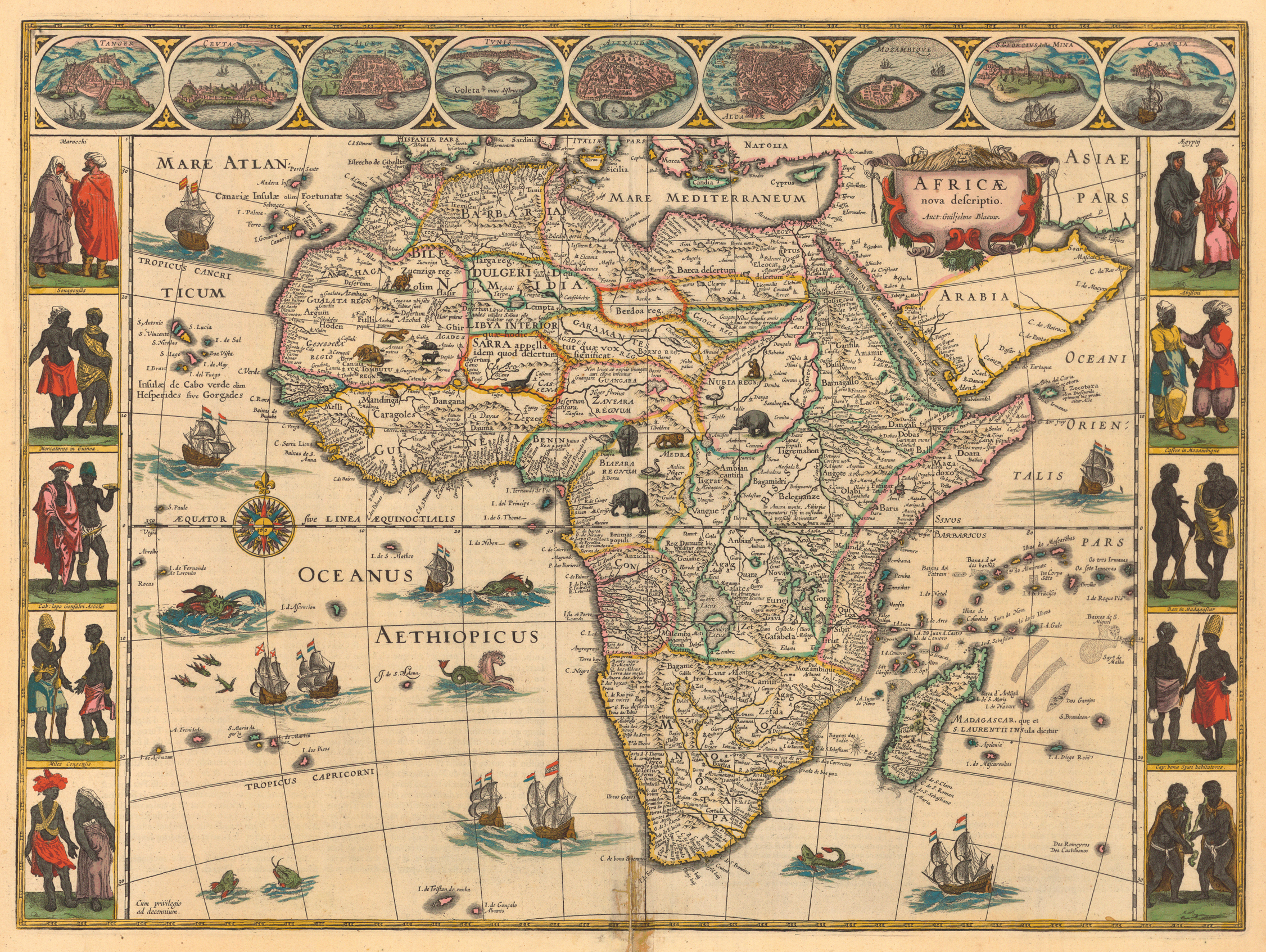
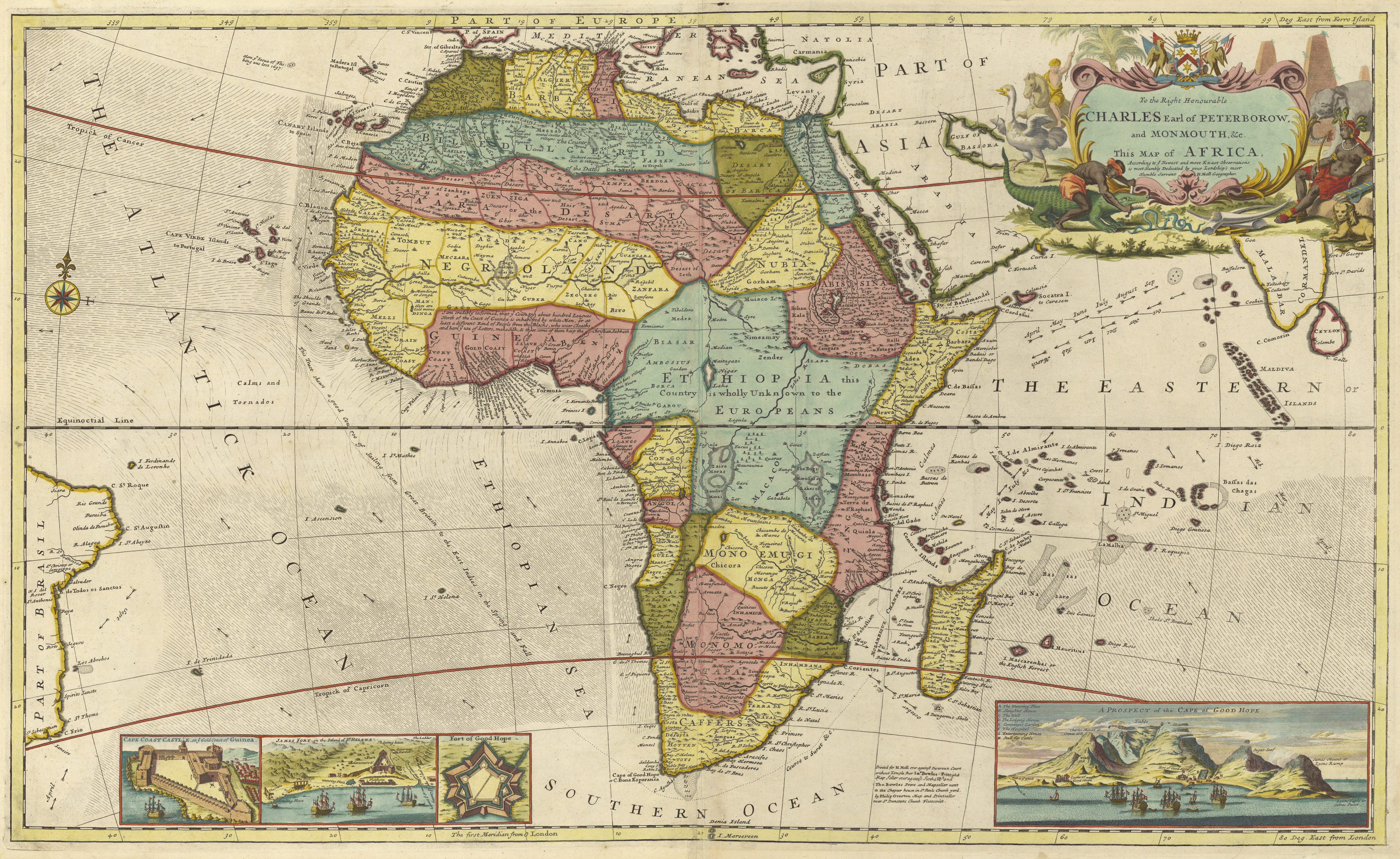
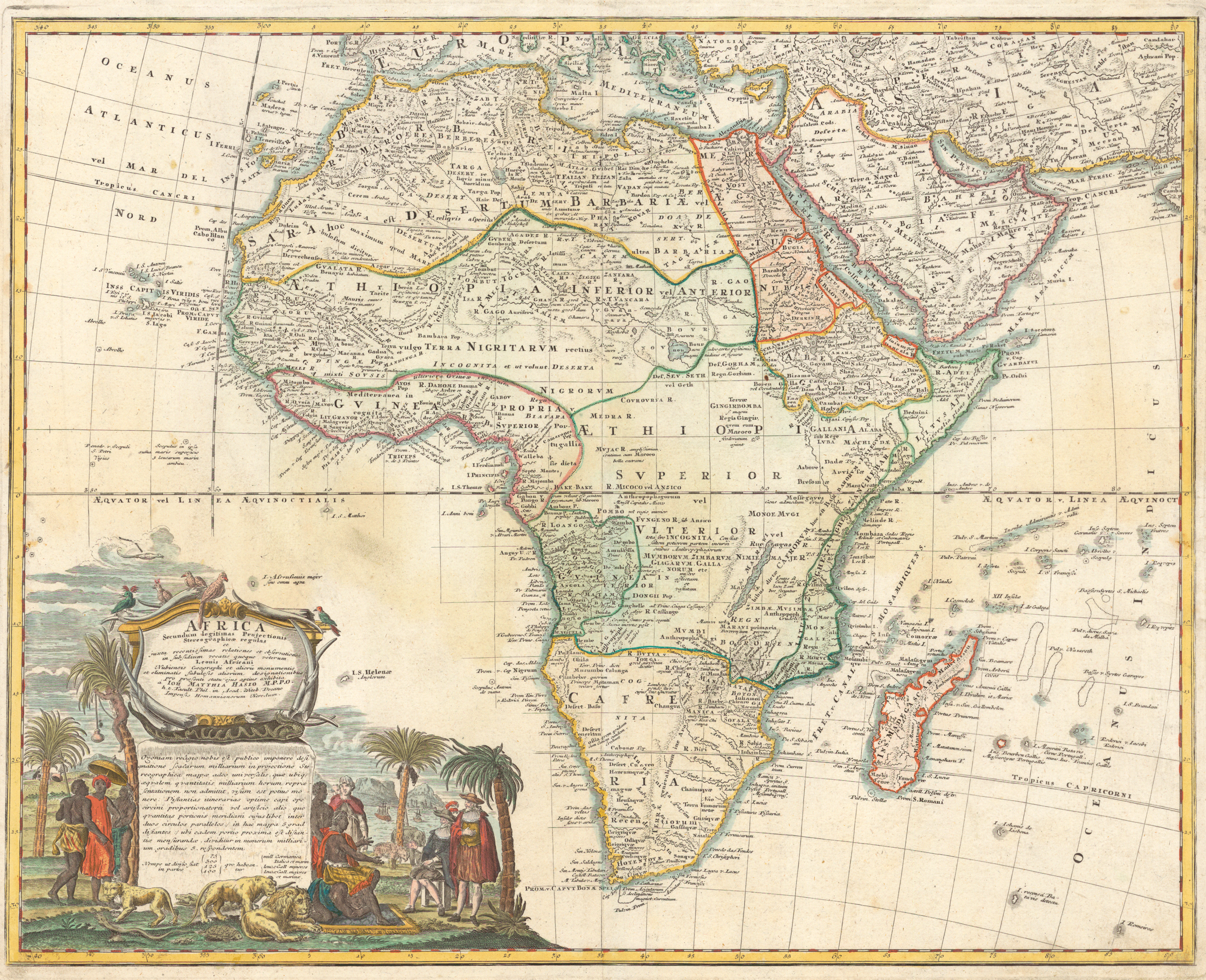
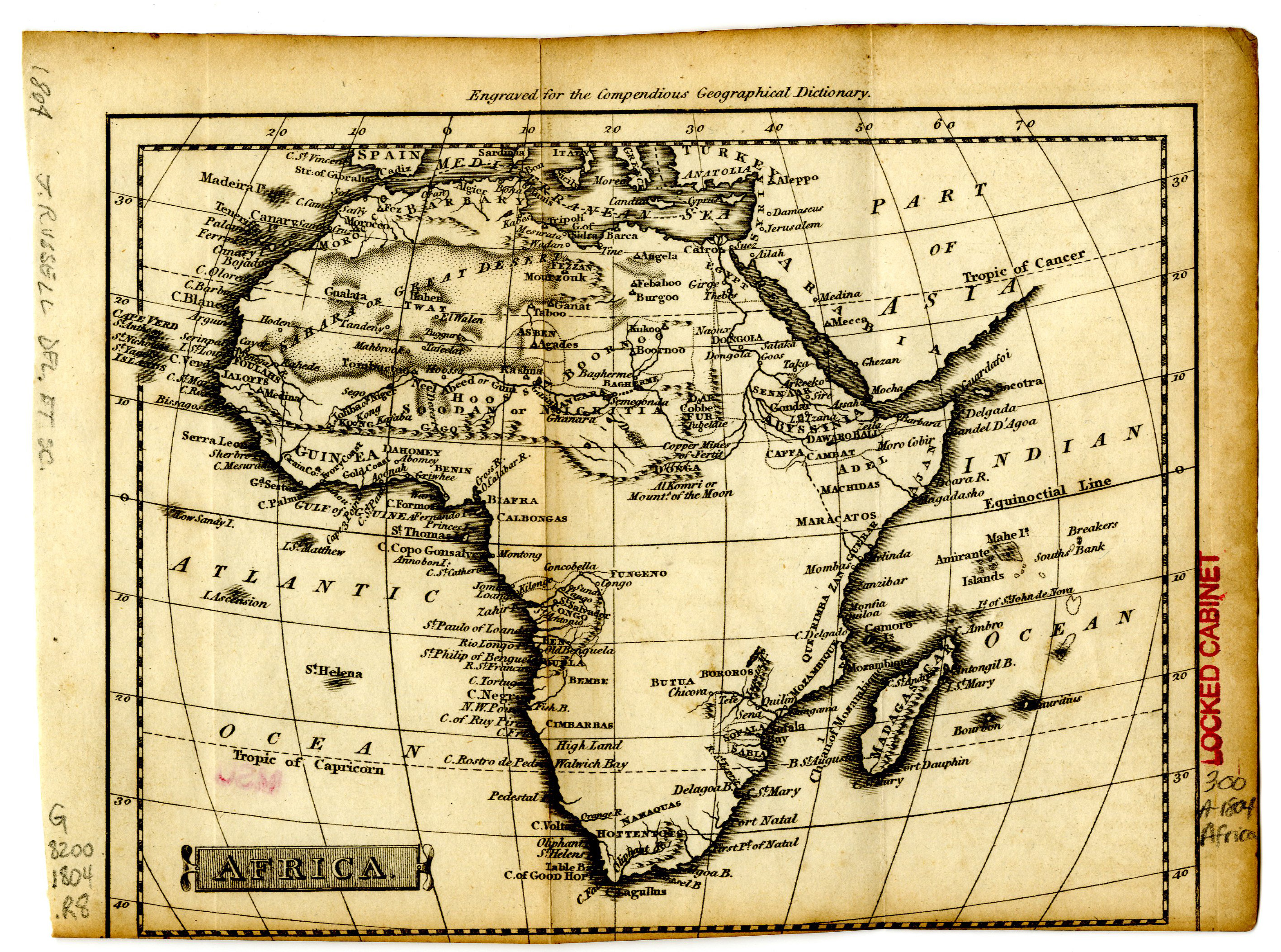
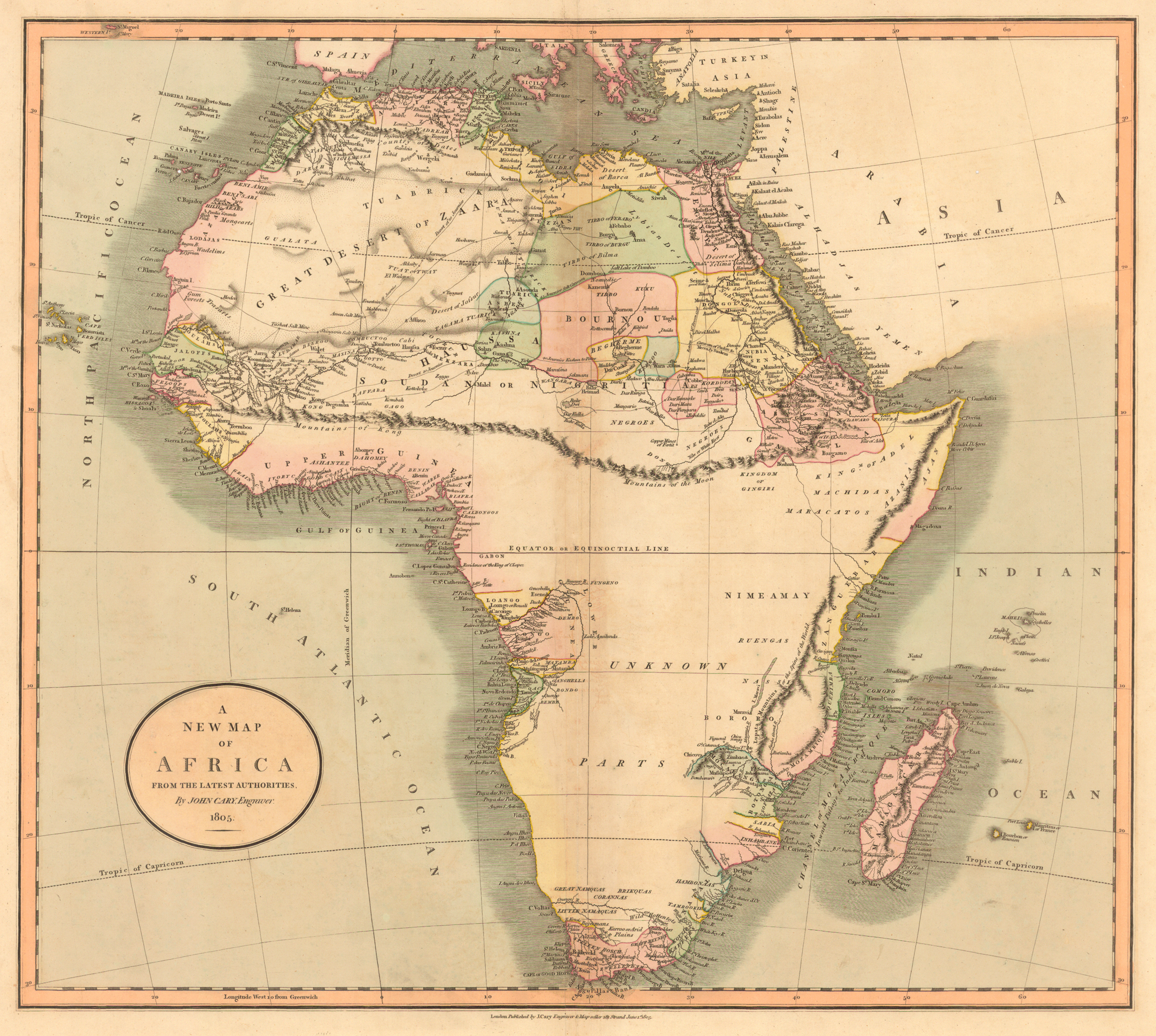
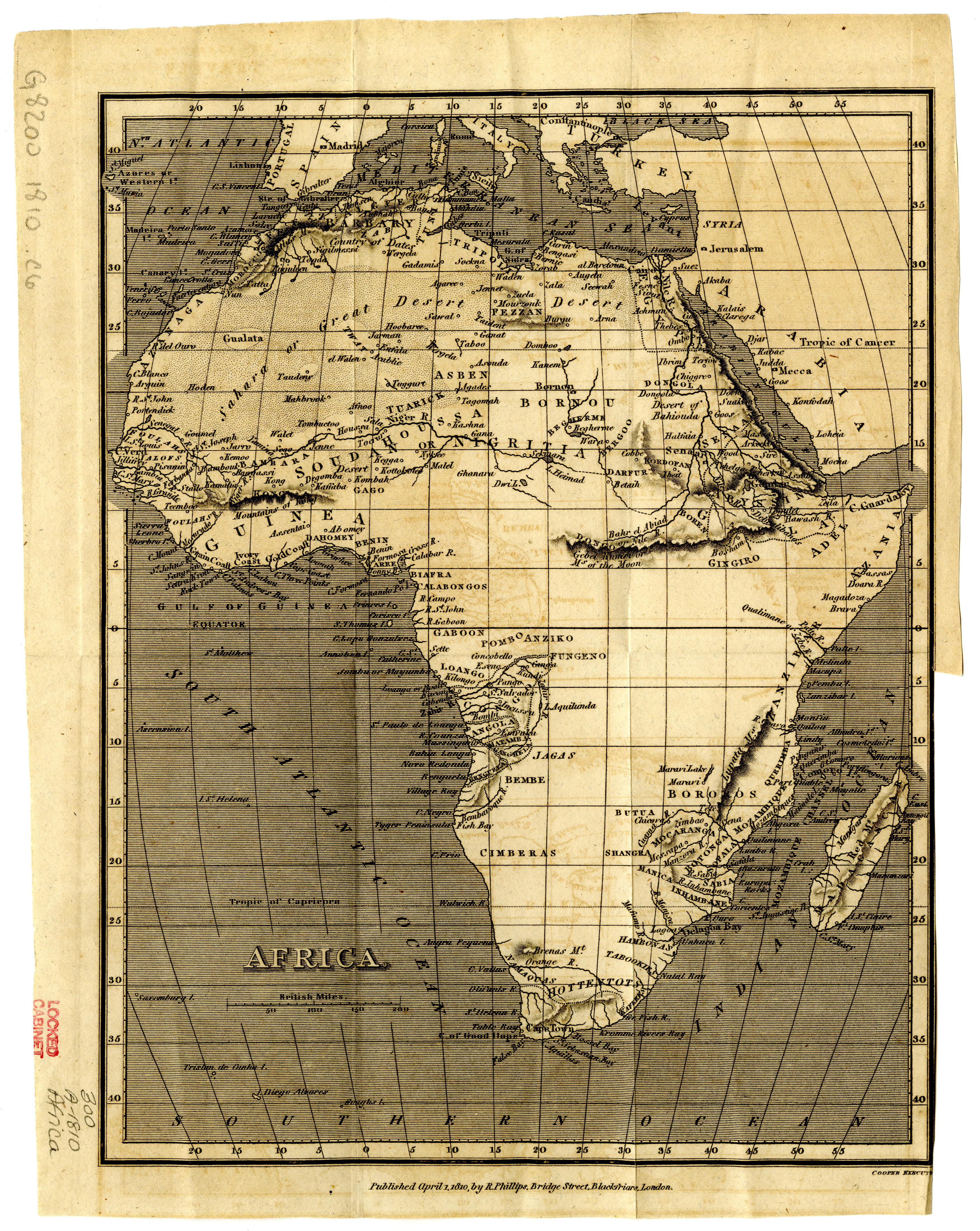
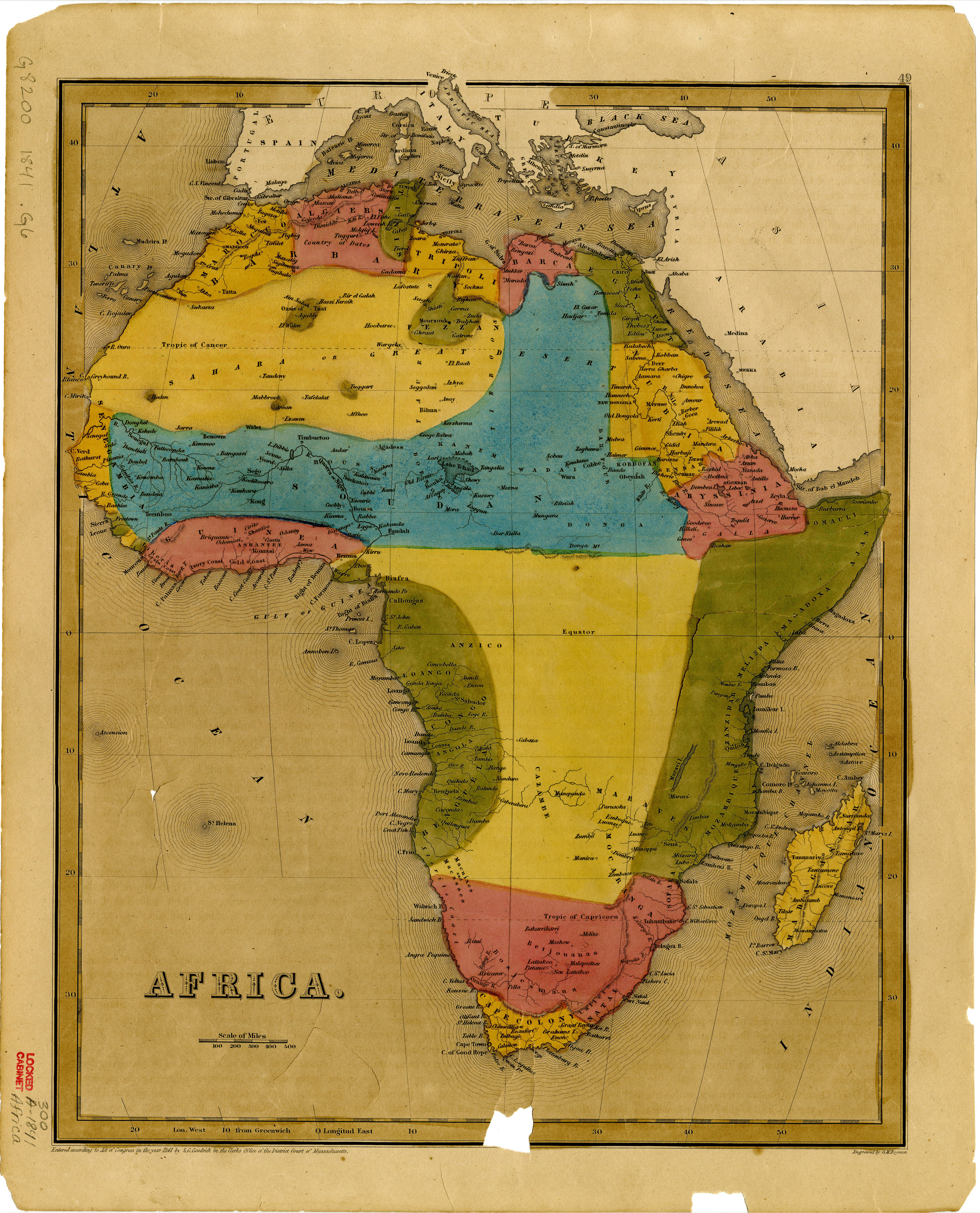
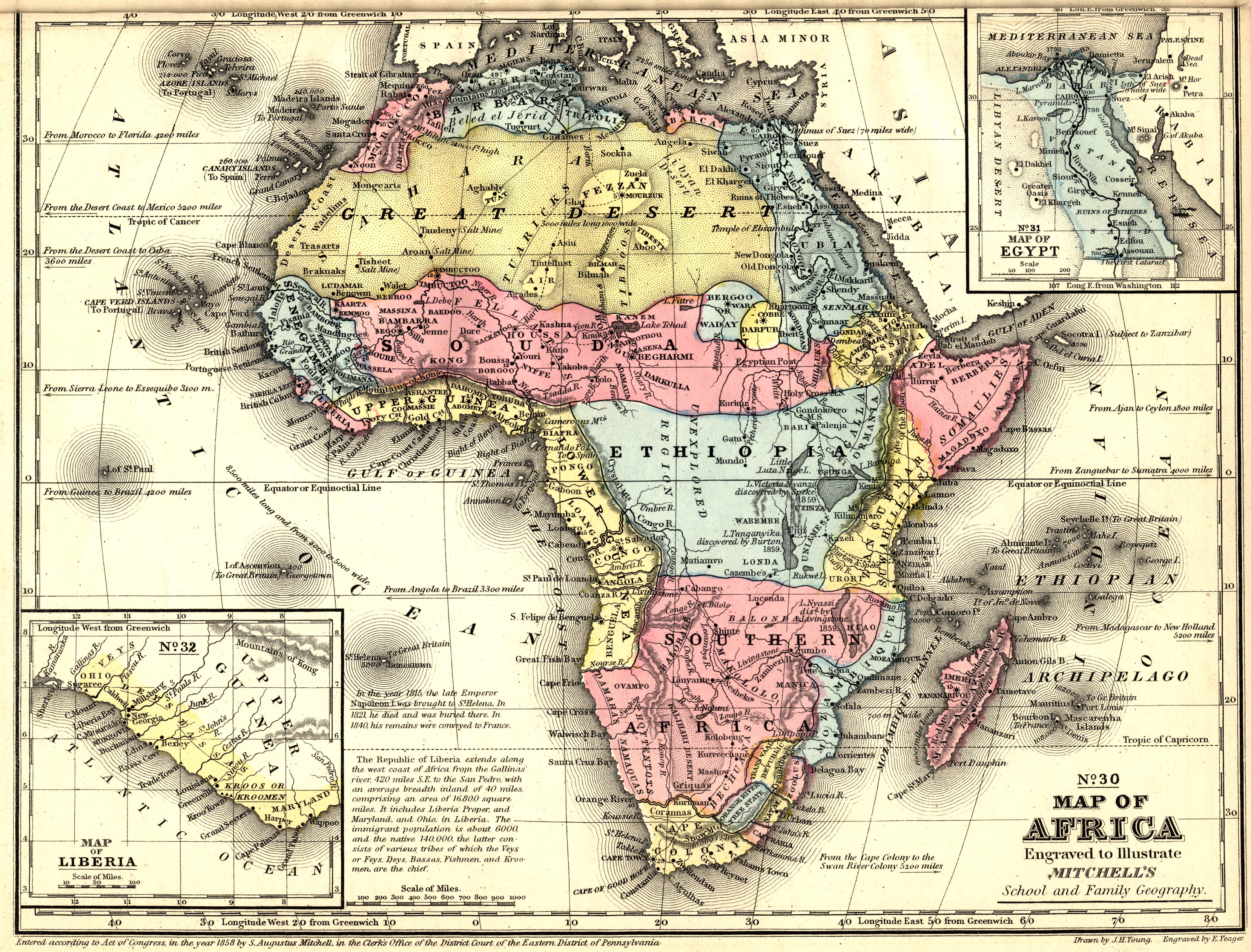
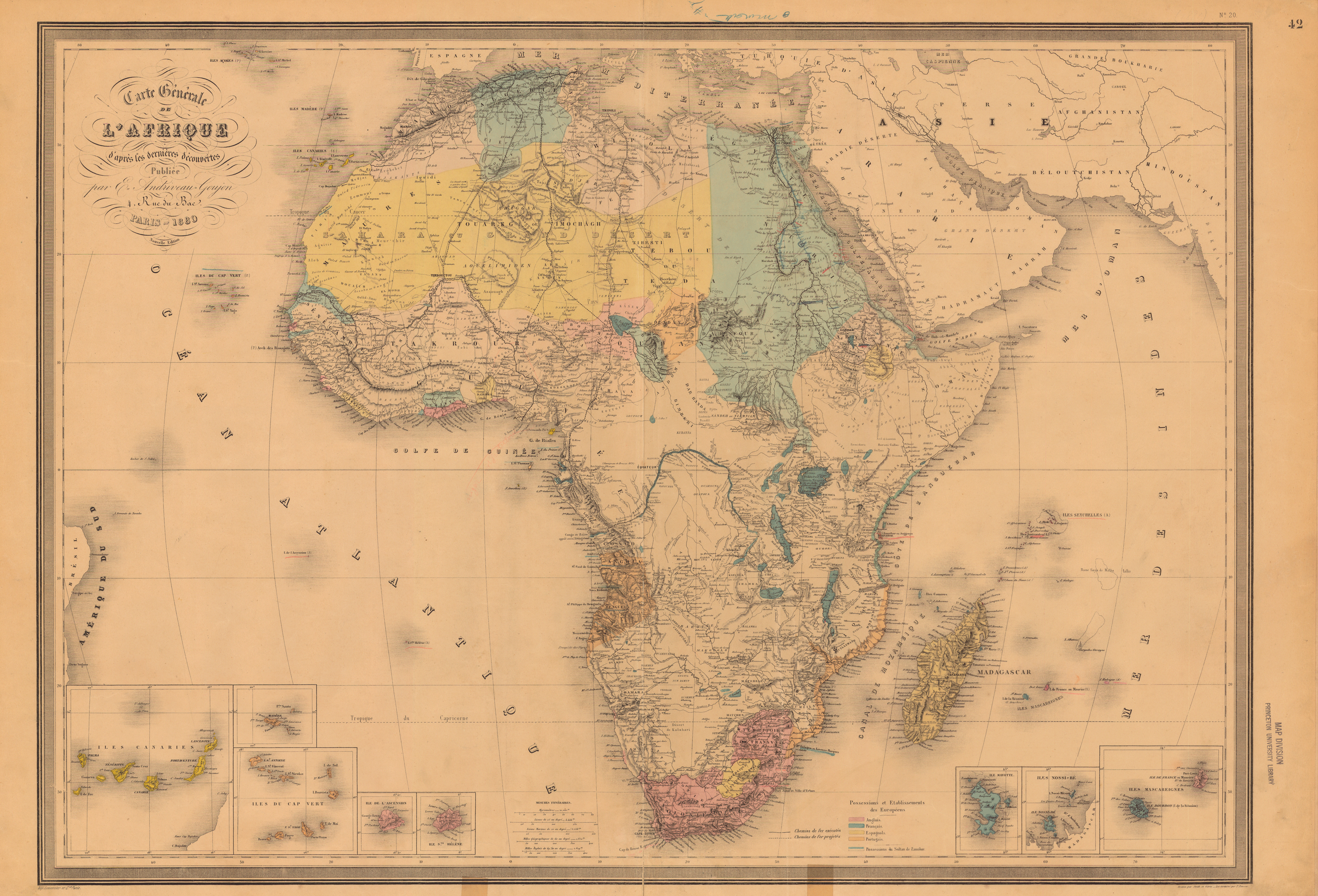

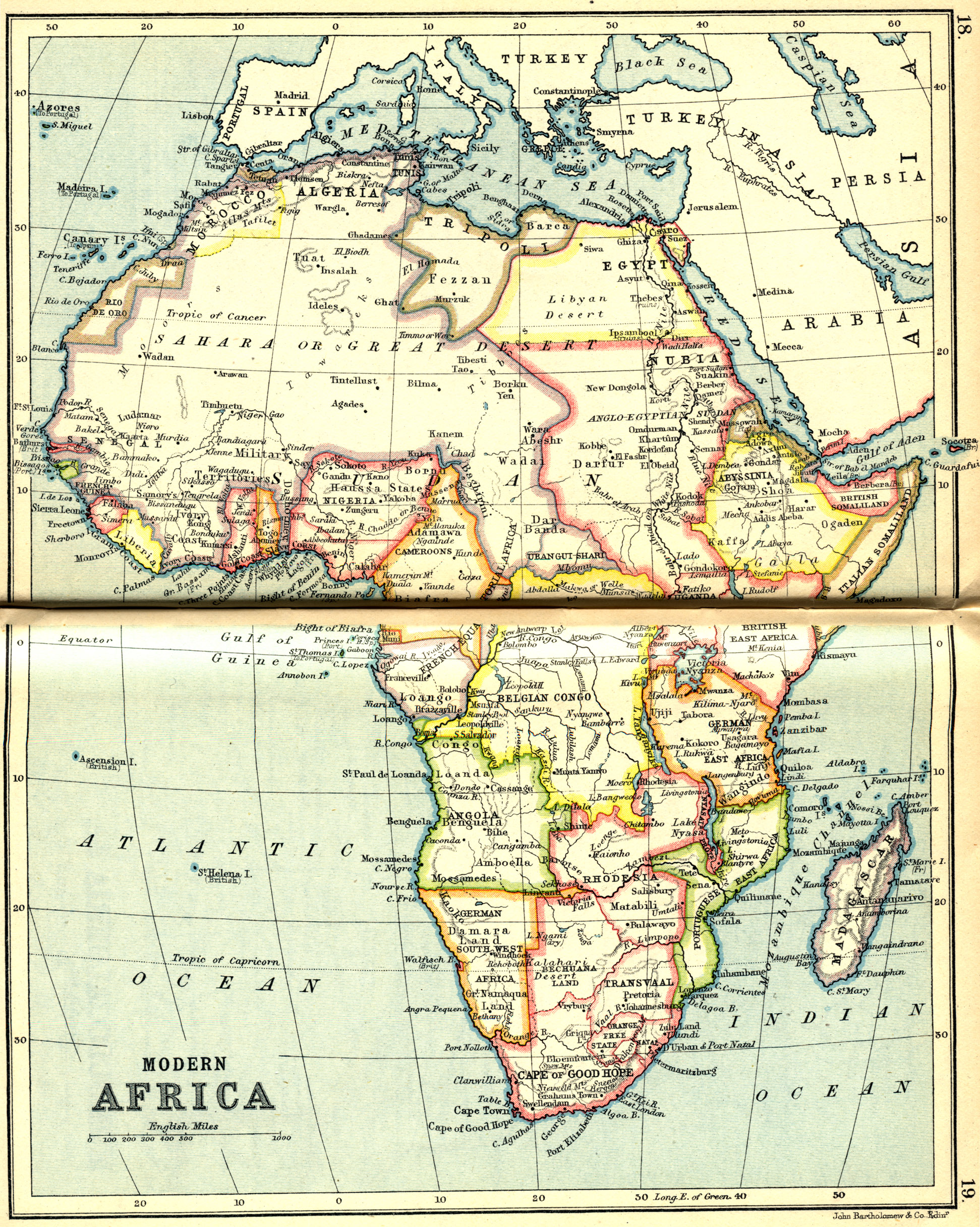
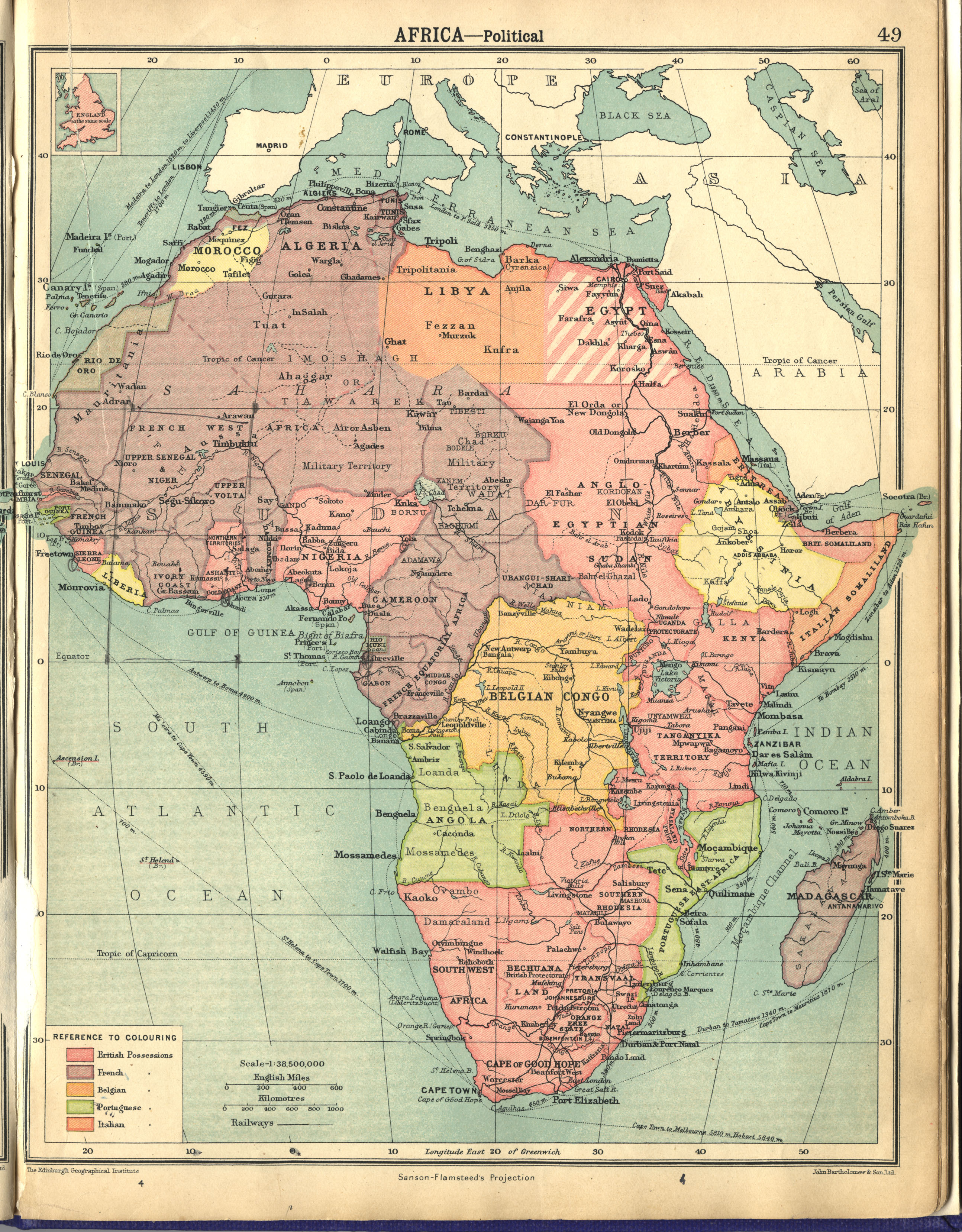


THE ASABA MASSACRE MONUMENT (From Vanguard) https://www.vanguardngr.com/2017/10/photos-asaba-indegines-remember-1967-asaba-massacre/

ASABA INDIGENES AT THE MONUMENT OF THE 7TH OCT. 1967 ASABA MASSACRE – From Vanguard https://www.vanguardngr.com/2017/10/photos-asaba-indegines-remember-1967-asaba-massacre/
“Killing Biafra” seems to have been the agenda of certain powers in Nigeria since after the Nigerian civil war. This was promptly pointed out by Agwu Okpanku in 1975 directly after the Nigerian government decreed the change of the name of Bight of Biafra. His article was titled “Killing Biafra” and was pointed and very instructive. Instead of taking heed to the thought-provoking things he said in the article, the Nigerian government rather detained him. He later died mysteriously, and it was officially reported he fell off a moving train while unofficial reports had it that he was murdered and dumped beside a rail track. His death was viewed as part of the process of “Killing Biafra” which actually followed in many ways all through the years.
Obi Nwakamma says it the way it is:
“When Agwu Okpanku wrote ‘Killing Biafra,’ he was simply reminding the triumphalist power of that moment, about the indelicacy as well as the futility, in decreeing oblivion. Biafra was an independent republic. For three years it fought for its sovereignty. It had symbols; it had documents, and it had a material presence which the Federal Military Government’s policy was working rather too hard to erase, in uninformed attempts to force ‘one Nigeria’ down the throat of former Biafrans.
“So, for instance, the Uli Airport, which could have been preserved for its historical significance and value was bulldozed; the Bight of Biafra suddenly became ‘Bight of Bonny;’ material evidence that had any hint of Biafra were seized and systematically destroyed, or kept sealed – until Babangida established the National War Museum in Umuahia. It would have been tolerable if the former Biafrans felt a welcoming sense of justice and acceptance to ‘one Nigeria.’
“But, no. A lingering sense of alienation remains from Nigeria’s mishandling of the policy of the ‘The Rs’ announced at the end of conflicts. In actual fact, at the end of the war in 1970, Sam Ogbemudia as military governor of the Midwest had quickly made contact with the now late T.E.A Salubi and Dr. Nwariaku, one of the great Biafran scientists, and a key figure of the Biafran Research and Production (RAP) department whose innovations in war production gave insight into the capacity of the black mind, and quickly made a case at the Council of States for the Gowon administration to urgently gather these scientists, rehabilitate them, and use RAP as the basis for Nigeria’s industrial revolution.
“Ogbemudia was strenuously opposed
by his colleagues in the council: nothing of such should be done with “the
rebels,” he was told. Post war federal policy, not surprisingly, was at odds
with reason, and it was soon clear to those who had fought for Biafra that the
Federal Military Government’s policy of “reconciliation and rehabilitation” was
no more than a hollow pact calculated to disarm the Biafrans. Since 1970, the
mindless and tragic exploitation, and the strategic policy of neglect has left
areas of the former Eastern region bitter, frustrated, and alienated”28
The
attempts to kill Biafra have rather had the effect of resurrecting and
enlivening Biafra. If the Nigerian
government had not treated people of Biafra so badly in the years following the
end of the civil war in 1970, there would have been no resurgence of agitations
for self-determination for Biafrans as has been seen to be progressively
increasing.
We are not in a comfortable situation and we have been greatly wounded from inflictions over the years. The present situation is not one that can be accepted by any people, and a solution has to be found. This has to be done in a clear calm head that has carefully appraised the past and the present, and what the issues and implications really are. This kind of disposition is only possible in a healed body and soul. Healing from such terrible hurts cannot be said to be an easy thing to do but we have no choice but heal and move on.
The best instrument, indeed the only instrument for healing hurts is forgiveness29. The fact is that while forgiving generally, we have to situate the matter properly and identify who are the real oppressors with evil agenda and some others we may not have recognized as also being real victims too.
The issue of marginalization, for instance, is commonly held to be the lot of the East, especially in infrastructure provision, equity in appointments and access to vital national facilities for development. The Westerners are also crying out and leading the call for Restructuring. What is not known by many is that the Northerners are the most individually marginalized and the most personally deprived. They have been so marginalized and deprived, not by the Nigerian state but by some of their own leaders and some privileged Northerners who, incidentally, are in league with the same brains behind Nigeria’s problems – the same cult of the elite cabal, the faceless cabal-within-the-cabal who are doing the manipulations unidentified, the Spoiler Virus ingrained into the genome of the Central Government.
There are no bad tribes in Nigeria and ethnicity is not a problem for ordinary Nigerians, who, obviously, live together in peace and harmony all over Nigeria. There are no bad religions in Nigeria, unless an entity is falsely called religion (such as the Ikorodu Badoo and such esoteric cults), and religious plurality is not a problem for ordinary Nigerians, who, obviously worship peacefully in their various places of worship all over Nigeria which co-exist peacefully. The conflicts with ethnic or religious colorations observed were rather political, engineered, instigated and orchestrated by those few terrible elite bad eggs who are the merchants of trouble and manipulators par excellence.
The conflicts do not result from any primordial tribal or religious sentiments, as often claimed, but the fear is that seeds of foul sentiments are being speedily sown.
There are succeeding generations of this Cabal and they keep transmitting their legacy and agenda. Some of them are highly-placed learned people, who were said to have met and got inducted at some exalted institutions overseas, where they acquired very high quality education.
They are the powers behind the audacity of the group who, on 6 June 2017, in what they called “The Kaduna Declaration”30, issued a quit notice to Igbos living in Northern Nigeria to leave the North before October 1 2017 and who dared the Kaduna State Governor and the Police to arrest them as ordered. They went around openly doing more outrageous press conferences and threats, sending a disgraceful request to the United Nations concerning Biafra. The infamous cabal and this Northern group were thought to be behind the graphic anti-Igbo hate song31 that started circulating shortly thereafter, and feared to be pre-calculated to incite bloodshed in the run up to the expiry of the quit notice.
They are the ones that own cattle and employ poor, ordinary Fulani to herd the cattle as poor homeless nomads deprived of education and essentials of good life, but empowering some of them with weapons of destruction, and with audacity, while at the same time manipulating their psyche to have utmost respect for their cattle and to drastically deal with any perceived threat to the well-being of their cattle, even when that well-being of the cattle involves eating people’s crops and destroying people’s farms, resulting in cattle herders’ atrocities that have occurred. Some of the cattle owners are said to be retired Generals of the Nigerian Armed Forces who were used to impunity, atrocity and brutality.
Stigmatization of Fulani, following the actions of sponsored marauding Fulani Herdsmen gang doing senseless brutal killings in the country and engineered by this Cabal that armed them with sophisticated weapons, is gradually generating thoughts that every Fulani has that murderous mentality. This is unfortunate as millions of ordinary Fulani people are peaceful and kind.
The same elite cabal were the ones who wanted Awolowo dead in prison, they were the ones who engineered the stealing of Moshood Abiola’s presidential mandate clearly delivered to him by the Nigerian people, imprisoned him and, allegedly, killed him in prison, the same people assassinated his wife Kudirat and they are the ones that killed Dele Giwa with a letter bomb. Boko Haram sponsorship is said to be the present undertaking of some of them.
The members of this evil cabal are the ones that instigate the mayhem carried out by ordinary poor northerners when the one they favour loses an election, as it happened after the 2011 presidential elections. Election violence caused by instigation of ordinary poor people also happens in other parts of Nigeria but it is more drastic and deadly in the North.
The survivors of the attack on IPOB members on May 30 2016 observed that the soldiers seemed to be a select group of those of Northern extraction that displayed terrible brutality and anti-Igbo hate utterances. Those were on a mission with clear high-powered briefing and mandate from similar Wicked Souls that briefed and mandated those that performed the Asaba Massacre and other similar activities carried out by soldiers. They find it easier to do this through soldiers due to the Command-and-Obey nature of the Army. Anyone who observed those who did the IPOB killings and Human Right abuses, and those that committed atrocities during the war, during the pogrom in the North and some other killings, would easily conclude that the Northerners are extremely wicked. I held so myself. But it could be easily observed that Igbos and other people are living peacefully in every part of the North loved by ordinary Hausas, Fulanis, Kanuris and other groups in the North.
The reality is that it is a few persons – the same elite cabal - that are responsible for some big clashes observed and that it is easier to get at the Northern masses due to their pitiable high level of economic and educational deprivation by these self-centered monsters. Such people are much easier to radicalize and manipulate. The tragedy is that these few powerful elites manipulate and instigate them to do their bidding against others and eventually harm themselves. They have cleverly carved out images of themselves that make Northern masses revere and virtually deify them and be ready to do their bidding religiously, and even die for them.
For privileged Northern people, Northern Governors and government officials, it is time to think more seriously about the future of Northern youths and children and it is time for Arewa leaders to device strategies for the development of the North and her young population instead of wasting valuable time and energy meddling with the affairs of other groups. The need is dire and urgent. The situation is to be sensibly appraised.
The government should be able, with our formidable state Intelligence paraphernalia, to fish out these very few but powerful engineers and architects of trouble who are making life very difficult for Nigeria, and stop them. This can be done if they have the political will. But who is “the government” if not they? They run matters albeit through fronts that are in their firm grip. “Who is The Presidency?” was that famous response of Babachir Lawal, the former Secretary to the Government of the Federation to the question, on why he was suspended, on the day he was suspended by the Presidency for a serious corrupt practice. Of course they are in charge of everything and he hoped nothing was going to be done ultimately. The situation seems hopeless as it is extremely difficult to dislodge a virus, especially this deadly Spoiler Virus, but there is always a way out and this way shall be found in time as God wills.
We
should all come to our senses and understand we are being used as pawns to gain
their dubious ends. Let all cooperate, especially the youths who own the
future, and say no to unwholesome manipulations, avoiding negative profiling of
other tribes but seeking to understand them better in spite of prevalent
perceptions.
A very disheartening aspect of Biafra and
Politics is lack of agreement inside Biafraland. We have observed attitudes and heard comments
from people of South-South origin showing they do not believe they are
Biafrans. This is a pathetic lack of knowledge as they are more Biafran than
others, being part of the bona fide Biafra homeland as they can see from
Historical Geography, and being the ones that directly sit on the Bight of
Biafra. There are, however, many in that region who are better committed than
the others. An example is the Biafra Nations Youth League (BNYL) led by
Princewill C Obuka and Ebuta Ogar Takon, which originated
from the South-South region of Nigeria and has members mainly from Cross-River
State, Akwa-Ibom State, Rivers State and includes many Igbos too.
It
has to be pointed out, however, that this lack of knowledge has caused us
irreversible damages that could have been avoided. The same monstrous people engineered
the tagging of properties Igbos in Rivers State, after the war, as “Abandoned
Properties” and making them lose these properties. Antagonism against their
Igbo brothers was instigated by them in Niger Delta people before the war,
which they orchestrated through the Niger Delta’s prominent activists led by
Isaac Adaka Boro and Ken Sarowiwa whom they later betrayed. The monstrous
viruses have always been smart criminals and experts in using their powerful
tools, the most effective being the “Igbo
Domination Phobia tool” with which they infected great brains such as
Awolowo’s, which became poisoned against Biafrans during the 1967 war, and
those of the two top Biafran personalities,
Isaac Boro and Ken Sarowiwa,
It
will be helpful to share these Facebook conversations here: A long, vitally
enlightening post from Morning Star Political Moment Matters and another by
Roland Ediri Idimi:
Morning
Star Political Moment Matters:
NAIJA NEWS SWEEP – During the Biafran-Nigerian civil war, there were a few Biafran sons and daughters, who were deceived by the Hausa-controlled Nigerian government and used to fight their fellow Biafrans. Some of them were made to believe that Biafra was dominated by Igbos, who would commandeer all the resources. Isaac Adaka Boro and Ken Saro Wiwa were among the prominent sons who were misguided. They paid dearly for their betrayal of the Biafran Republic with their lives. And for more than fifty years, their kith and kin have suffered the nemesis of the errors of these sons who were misled and betrayed by the Hausas and their Yoruba friends
Isaac Boro was killed at the peak of the war in controversial circumstances that strongly linked Colonel Benjamin Adenkule to the death, while Ken Saro Wiwa was eventually killed by Sani Abacha, who worked with him during the war, at Bonny. The stories of Isaac Adaka Boro and Ken Saro Wiwa are great lessons for contemporary and potential betrayals of the renewed movement for the restoration of Biafran Republic.
Isaac Jasper Adaka Boro, from Kaiama (in present day
Bayelsa State), was born in September 10, 1938 in Oloibiri.
Isaac Boro, while studying Chemistry at University
of Nigeria Nsukka became the Student Union President of the University. Despite
this support and political patronage he got from his Igbo brothers at the
university, Boro led the first revolution of resource control in Nigeria few
months after Aguiyi Ironsi became the Head of State of Nigeria.
He formed the Niger Delta Volunteer Force (NDVF),
the first armed militia of only Ijaw extraction. On February 23, 1966, Boro and
his NDVF declared the Niger Delta Republic. This was the first time any part of
Nigeria tried to secede. He believed that the Ijaw people deserved a fairer
share of proceeds of the oil wealth than they were getting from the Federal
Government.
For twelve days Boro and his militias battled the
Federal forces before they were finally defeated by the far superior Federal
firepower. Isaac Boro and some of his men were convicted of treason and
sentenced to death, but Ironsi out of mercy decided to jail him instead of
killing him as demanded by the law.
Isaac Boro
Revolution
On the eve of the Biafran-Nigerian war in May 1967,
Yakubu Gowon granted him amnesty and drafted him into the Nigerian Army. He was
afterwards commissioned as a major in the Nigerian Army. With his army of 1000
Ijaw soldiers he fought alongside Col. Benjamin Adekunle, who was heading the
3rd Marine Commando Division of the Nigerian army. With their deep knowledge of
the Niger Delta creeks, Boro and his men guided the federal forces and pushed
Biafrans back from the region. Boro fought with the Nigerian forces thinking as
they had promised him he was liberating the Niger Delta from Biafran forces. He
however never realised he was handing his people and the huge resources in the
region into the hands of Hausa-Fulani and Yorubas who pillaged the region for
years to come and impoverished his people till date.
Isaac Boro
was betrayed by the Nigerian forces he trusted. On May 16, 1968, after a
successful battle against Biafran forces at Ogu (near Okrika) in Rivers State,
Boro was ambushed by what many of his men then believed was a unit sent by Col
Adekunle. In a brief and fierce battle, Adenkunle’s men gunned him down. His
death went down in history as mysterious and as there was no conclusive
evidence on who killed him.
Strong allegations are rife that treacherous,
Adekunle, threatened by Boro’s rising prominence in the Nigerian Army, killed
Boro in order to usurp the glories of the success Boro helped the 3 Marine
Commando Division to achieve. He wanted to silence Boro as well silence the
people of Niger Delta. Subsequent to Boro’s death, Adekunle took all the
credits of the successes of the division.
A Regimental Sergeant Major under Boro was quoted as
saying that Boro did not die in the heat of battle with the Biafran forces. He
said the area had already been captured and secured by his company and Major
Boro was on an inspection tour when they came under fire. The type of gunfire
that erupted during the firefight that killed Boro was completely different
from what the Biafrans were known to use in that sector of the war. This
confirmed to them that it was one of the federal troops units that carried out
the ambush.
As soon as Boro died, his 1000 band of soldiers was
disbanded. According to Olusegun Obasanjo in his book My Command, Adekunle’s
post-war political ambition pushed him into killing Boro, as he was using the
war to building a ‘formidable’ name for himself. Obasanjo stated that “Col.
Adekunle, at this point saw the war not only in terms of crushing a rebellion,
but also as a means of building himself up for any future political position or
responsibility which he might wish to seek, I knew of people of Western State
origin who had felt politically victimized and who saw in Col. Adekunle a
saviour and told him so, and he believed them.”
What Boro fought and died for had eluded his people
for years. Niger Delta has remained impoverished despite the huge revenue it
has continued to generate for the country. Oil fields and mining leases have
been allocated to northern oligarchs and friends. Isaac Boro remains a lesson
for future revolutionaries in knowing where to pitch their tent32.
Roland Ediri
Idimi:
As for now I don't have time for APC
and PDP politicking. My major concern now is how to teach the people from the
Niger Delta of Biafra the truth they need to know about their history as to
deliver them from their present mental bondage.
The Niger Delta is defined as the
delta of the Niger River sitting directly on the Bight of Biafra side of the
Gulf of Guinea on the Atlantic Ocean - - -
TAKE NOTE OF THE WORD SITTING
DIRECTLY ON THE BIGHT OF BIAFRA. THERE IS NO DEFINITION OF NIGER DELTA WITHOUT
REFERENCE TO BIAFRA - - -33
The mistake is
still being made till today as many non-Igbos in Eastern Nigeria are easily
deceived into not identifying with Biafra. Many of them did that during the
civil war and the consequences are being suffered now. It is, however,
noteworthy that members of Nnamdi Kanu’s IPOB portrayed Biafra as an Igbo
project and did not communicate well with non-Igbos. The same cannot be said of
the IPOB led by the Supreme Council of Elders. All those misunderstandings
should now be in the past as more knowledge is now available and we have a
chance to redirect the project more intelligently. All states of the South East, South-South
states of Rivers, Cross River, Akwa-Ibom and Bayelsa, Cameroun, Gabon,
Equatorial Guinea, are all in Biafra. With a better knowledge we would all be
very proud to be called Biafrans.
Biafrans should continue their commendable
behavior of embracing other peoples. For now, we have to continue working with
other groups from North and West to ensure Nigeria is properly restructured
into a true federation and there is hope for success in spite of the efforts by
the elite cabal to prevent it from happening, for their own selfish gains,
believing that resource control component will rob them of their ill-gotten
facilities, such as oil blocks, and that the unitary government abolition would
rob them of the total and strangulating control they have on Nigeria. We are at
the cross-roads now and we should be very carefully weighing the options for
the future.
7. THE
FUTURE
Proper articulation of the objectives and accurate
definition of expectations are very important. Given the very depressing
scenario now existing in Nigerian politics and the failed and hopeless state
Nigeria has become, it is clear to everyone that we cannot continue on this
obviously destructive path. Something must have to give.
What is settled, and not negotiable, is Nigeria not
continuing as a quasi federation, being called “Federal Government of Nigeria”
whereas it is, practically, a “Unitary Government of Nigeria”. A unitary
government is defined as “characterized by or constituting a form of government
in which power is held by one central authority” (WordWeb). This is what
Nigeria is now and the greatest danger in this system is that all the units go
to the centre to share a common wealth. There has to be a formula for the
sharing and it can never be satisfactory to all in such a heterogeneously
constituted and configured country like Nigeria – different sizes, different
ethnicities different cultures, different religions, different attitudes
different needs – heavily bedeviled by unwholesome, systematically
injected systemic sentiments. There will
be unending conflicts that will keep on creating animosity between the units,
and encouraging the deadly quest for the control of the unduly attractive
centre that cannot run away from nepotism.
The injustice in the Nigerian situation is that the
wealth being shared is generated virtually solely by the Niger Delta with a
little contribution by a few other viable states and virtually nil contribution
by majority of the states, as they are, incidentally, non-viable. No state can
be non-viable in a Nigeria that is a true federation because the states have no
choice but work hard to prosper, are motivated on discovering the great
potentials really available for them and are encouraged to do very much for
themselves and pay commensurate tax to the center for taking care of its fewer,
but essential and national, responsibilities.
Nobody quarrels as a result of central revenue-sharing
in a Federation because there is none, and the federating units get on well in
a healthy, strong competition as they work hard to create resources and have
the right to control and harness their units’ natural resources. Every part of
Nigeria is richly endowed with natural resources and strong hard-working people
who are, however, not empowered and not encouraged to be reasonably productive.
Today, natural resources are not tapped, agriculture and industry are badly
neglected as all units scramble and quarrel for oil revenue derived from the
Niger Delta which, most unjustly, suffers terrible environmental devastation
and shameful infrastructure deprivation.
Marginalization seems to be unavoidable in the present
unitary system of government in Nigeria that is prone to foul manipulations,
nepotism and other forms of corruption.
There are other biting issues that make life difficult
for Biafrans in the present Nigerian set up and can be easily avoided if
Nigeria is restructured into a true federation where the federating units are
developing without being tied to the dependence on a Center, and so are not
affected by the demeanor of that Center, good or bad, towards any of them:
The blistering hatred for Biafrans by the
cabal-controlled Center is the greatest reason for us not to ever stay on in
the present kind of Nigeria that is not running a true federalism. In this
unitary system where the cabal owns the Presidency and has maneuvered all
strategic institutions, Military, Police, DSS, NIA, Customs, Immigration, Civil
Defense, EFCC, Justice, etc., to their control, Biafrans are in grave danger
and helplessly in their wicked hands.
This is already clear to all Nigerians as they have
observed how easy it was to mobilize the army and other security forces,
several times, to massacre unarmed young Biafrans in several places since the
take-over of government in 2015 by the APC, the party the cabal presently has
control of. Nigerians have also observed how they used the Armed Forces to
harass Biafran citizens of the Niger Delta and the South East, with heavy loss
of lives, in repeated Crocodile Smile and Python Dance operations. Is it the disgraceful
process of proscribing peaceful, unarmed IPOB and shamelessly declaring it a
terrorist organization in a juvenile judicial process, both of which were done
with glaring impunity, you would want to mention and leave out which?
All
these would not have happened in a truly federal Nigeria. The excuses for them
to commit these atrocities would not even have presented themselves. With such
a truly federal Nigerian government Biafrans would not have desired to secede
again from Nigeria. Herein lies the situation necessitating the weighing of
important options. Three options are to be carefully considered: 1. Biafra as
part of a restructured Nigeria, 2. Biafra as an independent country, 3. Eastern
Nigeria as part of Biafra Federation.
1. Biafra
as Part of a Restructured Nigeria:
Being
part of a Nigeria running true federalism, Biafra will be a happy place where
Biafrans would take their destinies into their own hands, so to say, unhampered
by inefficient or unfriendly federal set up. This kind of Biafra will
necessarily be very productive and this productivity will be immensely
beneficial to the Biafra nation and to a truly Federal Nigeria.

A standard set-up would be a four or five regional
outcome. Already decided are Biafra and Oodua, Arewa could be ready too and
middle Belt will duly follow. Edo and Delta may become part of Oodua, Edo alone
may become, Delta may want to join Biafra or Oodua that includes Edo, Edo and
Delta may stay together under a good name. The states, as we have them now, are
retained in the various regions as federating units of the regions which are
the direct federating units of Nigeria.
Biafra contains nine federating units,
The reason this will not be allowed by the elite cabal
is their firm resolve to run Nigeria as a hegemonic oligarchy to further their
born-to-rule doctrine. They seem to be irreversibly committed to that
aforementioned agenda voiced out by Ahmadu Bello, that “Nigeria is a plantation
bequeathed to the Fulani by Allah and that the Fulani will milk it until it
dies”. The plantation will not be in their direct control, for them to continue
milking, if Nigeria is restructured into a true federation. They are,
therefore, opposed to Restructuring that is a popular proposition all over
Nigeria, including in the North, and which would be most beneficial to the
North.
Make no mistake about this: it is not the ordinary
Hausa, Fulani, Kanuri, or the ordinary member of any other Northern tribes,
that has the born-to-rule and the milking of Nigeria to death mentality. Few
powerful and very clever members of the cult are into this. They are so
powerful and clever that they easily get even very educated and highly
respectable northerners to fall in line with their views and go on to propagate
and defend those views as their own. The magic seems to lie in linking such
views to a “defense of the North” attitude in the “defending the maligned and
derided North” mentality which many of these enlightened Northerners buy into,
in the spirit of an unalloyed Northern solidarity they believe they are called
to.
The reason they believe the North is maligned and
derided is probably because the North is often branded educationally backward
and unprogressive, and they do not like the sound of those categorizations. But
these are bare facts that are true, as very prominent Northerners such as the
Emir of Kano, Muhammadu Sanusi and the Sultan of Sokoto, Muhammed Sa’ad
Abubakar III, did acknowledge34, their views agreeing with my
thoughts that it is not the fault of the ordinary Northerner and needs
concerted efforts to correct. It is possible to do it in a Nigeria restructured
into a true federation, with a proper focus.
A proof of the above assertion of successful
manipulation of the Northern intelligentsia by this Cabal is found in the fact
that many distinguished Northerners who participated very articulately in the
2014 National Conference and were party to all the decisions taken were
evidently made to turn back 180 degrees to oppose their own marvelous
handiwork, perhaps unknown to them that they were being led by the nose by the
Cabal.
APC manifesto
was also supportive of these decisions, but when APC won the Presidential
elections in 2015 and took over the government, the elite cabal took over the
control of governance to the chagrin of even the First Lady, Aisha Buhari, who
spoke out publicly and the unsavory drama followed in which the President said
her place was “in the kitchen, the living room and the other room”. The Cabal
rejected the 2014 National Conference, and the Call for Restructuring, without
ever saying what it had against any of the principles in Restructuring, and APC
also turned 180 degrees against its own manifesto thanks to the
Cabal-controlled Presidency.
Other Northern elites and leaders quickly joined the
Presidency to campaign against Restructuring without knowing why they did so
except, perhaps, that the opposition to Restructuring had been made a Northern
agenda by the Cabal and Northern solidarity must be observed. Why do they not
know they are stabbing themselves on the feet by backing this view that
benefits only a very minute number of Northerners to the disadvantage of
millions of other Northerners? The only statement they commonly voiced out,
severally, was that “Restructuring meant many different things to many
different people”. No tangible argument was heard from them. There was an
argument which seems to have been put into their mouth by some other Nigerians,
which is that they felt the North was not ready.
The north is even readier than other parts, having
more untapped resources and having benefitted more than other parts in the
location of requisite infrastructure such as dams and irrigation facilities,
and would develop a great economy in many spheres, in a restructured Nigeria,
even more than it was in the 1960’s.
The Biafra in a restructured Nigeria is possible and
desirable but may not be allowed to be realized by extremely selfish and wicked
forces. This may force Biafrans to consider the second option:
2. Biafra
as an Independent Country:
This
is secession for self-determination, still maintaining good relations with
Nigeria. It is not wished that this would become necessary but, truly, when
Federation is made impossible disintegration is made inevitable. This is
because the present state of affairs in Nigeria is extremely unacceptable. The
process of self-determination is to be peaceful and is already ongoing. The
court process initiated by the Biafra Supreme Council of Elders has not been
withdrawn and should not be withdrawn. The Bilie Human Rights Initiative
registered both in Nigeria and in the United Nations to advocate for Biafra’s
right to self-determination and achieve independence by the rule of law and
other such efforts should avoid distractions and continue. International
discussions seem to have reached a significant level and should continue in an
accelerated mode.

The difficulty facing this aspect of
self-determination is that a referendum is required by the United Nations to
make sure that majority of the citizens are in support of the proposal, but the
Nigerian constitution presently in use does not provide for referendum, for any
purpose at all, in Nigeria. Everyone is presently up in arms against this 1999
constitution for this and many other reasons, and so, it is at the verge of
being consigned to the bin. There is a deafening clamour for the production of
a brand new constitution for Nigeria and it will soon come to pass if Nigeria
is to survive. Failure to produce a new constitution for Nigeria will spell
doom.
A national constitution that does not provide for
referendum is not designed for democracy and cannot be used to ensure justice
in some crucial national and international issues. A new Nigerian constitution
will surely provide for referendum for many other reasons too, and we shall use
it appropriately to obtain the desired Biafra self-determination.
The courts are capable of doing much more than can be
imagined. Let us think out of the box and initiate a formidable legal project
that will discover that it is possible to cause a referendum to be held whether
or not it is provided for in the Nigerian constitution. The provision exists in
the United Nations system and we can make it be used in Nigeria that is a
member. The Nigerian constitution, or any other constitution, cannot contain
every concept under the sun. Any concept that is not expressly an illegality
and not undesirable can be acceptable and usable under any constitution whether
it provides for the concept or not.
A fundamental principle in international law is the
right of people to self-determination.
International Law recognizes this principle as a jus cogens rule,
also called a Peremptory norm, which is a fundamental principle of
international law that is accepted by the international community of states as
a norm from which no derogation is permitted35. This is “binding, as
such, on the United Nations as authoritative interpretation of the Charter's
norms”36. United Nations Charter seeks “to develop
friendly relations among nations based on respect for the principle of equal
rights and self-determination of peoples - - -”37.
This is how very important
the principle of self-determination of peoples is to the United Nations and how
seriously they are set up to take such issues.
They cannot, however, initiate or articulate or follow
the case for us. Our intelligent handling of it matters a great deal.
Kanu’s IPOB was very loud and mobilization was superb.
It, however, was populated by a significant number of easily antagonistic ardent
followers who readily poured vituperations on Biafran elders and leaders, and
other people, and wished them unspeakable evil, even for just giving them some
advice. They lacked necessary decorum communication tact, a good level of
articulation of objectives, definable direction and predictable good end, with
no programme or management strategy for an ultimate success of the agitation
project, making a shameful South Sudan scenario a high possibility, where a successful
struggle for self-determination did beget a pitiful struggle for self-extermination.
Zik and his colleagues who fought for Nigeria’s
independence did not win by just making loud noise and hitting their heads
against the brick wall that is, in this case, the intransigence of the adamant
Nigerian government, but by intelligent engagements and maneuvers, involving
the United Nations and other relevant bodies. Knowledge base and Intelligence
available to Kanu were, obviously, enormous but management of them was not very
tactful and they played into vile hands. Their courage was gargantuan, however,
and greatly admirable.
It is strongly felt that there could be a way of
getting the United Nations to directly organize a plebiscite in Biafraland. A
precedent can be drawn from the case of Northern and Southern British Cameroun.
“The United Nations
organised a plebiscite in the Cameroons on 11 February 1961
which put two alternatives to the people: union with Nigeria or union with Cameroun.
The third option, independence, was opposed by the UK representative to the UN
Trusteeship Council, Sir Andrew Cohen, and as a result was not put. In the plebiscite,
Northern Cameroons voted for union with Nigeria, and Southern Cameroons for
union with (the formerly French) Cameroun”38.
Nigeria and Cameroun were granted Independence in 1960
and this necessitated the UN-organized referendum to determine the fate of the two
regions which were part of Nigeria administered by the British-ruled Nigeria as
British Cameroons, a United Kingdom Trust Territory of the United
Nations, which participated very actively in Nigerian politics, Southern
Cameroon having had thirteen members in the Eastern Nigerian House of Assembly
at Enugu.
Another important precedent can be seen in the case of
transfer of the sovereignty of Bakassi Peninsula from Nigeria to Cameroun as a result of a judgment by the
International Court of Justice39. The Nigerian Senate said, on November 22 2007, that the Greentree Agreement ceding
the area to Cameroun was contrary to Section 12(1) of the 1999 Constitution,
and rejected the transfer40. The territory was transferred to
Cameroon on 14 August 2008 in spite of the rejection41. This action of the International Court of
Justice proves that provisions of Nigeria’s constitution can be overridden or
ignored by an International Court of Justice, depending on the nature of the
judgment. It is the same 1999 constitution that has been the stumbling block to
Biafra self-determination for not providing for referendum.
If we work hard we will find the way around the
difficulties through getting the UN to take full charge or through a suit at
the International Court of Justice, with our mountains of graphic evidence and our
legion of erudite legal personalities.
Perhaps
the first law suit we should institute is a suit challenging the change of the
name of Bight of Biafra to Bight of Bonny. It should be a suit to set aside
that 1975 decree and declare it null and void and of no effect, as Bight of
Biafra also belongs to three other countries: Cameroun, Equatorial Guinea and
Gabon. There was also no good reason to change the name and can be translated
as an interference with another country’s territorial identification.
3. Eastern Nigeria as Part of Biafra Federation:
Whether any of the first two options succeeds or not, a third option can still take place. This involves the much desired principle of retracing the natural boundaries of indigenous African nations destroyed and distorted by balkanization resulting from the scramble for Africa by the Europeans, following the 1884-1885 Berlin Conference. Europe's arbitrary post-colonial borders left Africans carved into countries that did not represent their heritage. This is a contradiction that still troubles Africa and her peoples today. The names of those primary African nations were also effaced and they lost their autonomy along with it following the balkanization, and colonization. After independence those countries that emerged in the new Africa, post scramble, lost the identities of their indigenous homelands some of which were great nations; they now have nothing to show for their previous exalted existence.
Although the Europeans (their governments) w.ere
responsible for the loss of the identities of the original African nations, it
is important and in deserved fairness, to say that those African nations were
identified and documented by Europeans (explorers, travelers and
cartographers), making it possible for us to have known about them. The
identities were lost into the emerging colonized countries but few of them had
landmarks that pointed to their full identity. One of these is Biafra.
Biafra
was not lost completely and there is still a landmark with which to retrace her
original boundaries completely. This landmark is the Bight of Biafra. Bight of Biafra is the broad bay within the Gulf
of Guinea of the Atlantic Ocean which marks the coastline of Biafra. In other
words, Biafra kingdom was lying on the Bight of Biafra. With this landmark and
the knowledge obtained from the historical maps made by the European
cartographers, the original boundaries of the Biafra nation can be retrieved. There is an indigenous African homeland that
can still be retrieved successfully in line with present discussions in Africa
concerning the desired native borders and the arbitrary European borders that
separated Africans of the same heritage. Biafra is that indigenous African
homeland.
Retrieving our African borders is the project to be
carried out in this third option on discussion. Arbitrary European borders
separated Africans of the same heritage and severed off parts of native
homelands, merging them with some other incompatible parts.
An example of difficulties created by the European
arbitrary borders is found in the already discussed movements of Northern and
Southern Camerouns. Another example is found in the Bakassi conflict:
“When the nations of Nigeria and Cameroon
went to settle a border dispute in 2002, in which both countries claimed an
oil-rich peninsula about the size of El Paso, they didn't cite ancient cultural
claims to the land, nor the preferences of its inhabitants, nor even their own
national interests. Rather, in taking their case to the International Court of
Justice, they cited a pile of century-old European paperwork.
“Cameroon was once a German colony and
Nigeria had been ruled by the British empire; in 1913, the two European powers
had negotiated the border between these West African colonies. Cameroon argued
that this agreement put the peninsula within their borders. Nigeria said the
same. Cameroon's yellowed maps were apparently more persuasive; it won the case
- - -”42
This third option involves consultations with other
countries that are in the bona fide Biafra homeland, to retrieve the Biafra
homeland in its entirety, and form a Biafra Federation with the individual
nations in the homeland, developing a good formula to forge a workable union.
The bona fide membership of the Federation comprises the nations in Eastern
Nigeria, Cameroun, Gabon and Equatorial Guinea. This is a federation of
champions.
It is believed that agreement will not be a problem if
there is proper knowledge. Making the requisite knowledge available is the key
to the success of getting Biafrans in the various nations cooperate in the
realization of the Biafra Federation which has great potentials.
The Biafra Federation will be located in a superb
geographical belt with the best climate and vegetation generously endowed with
natural resources, all the federating units having access to the sea at the
Bight of Biafra as they are all linked by a long continuous coastline, assuring
the Federation an enviable maritime geography.
The constituent islands within the Bight of Biafra and the vast
coastline provide beautiful opportunities for lots of tourist destinations. The
potentials of the area are enormous, as experts would confirm, regarding the
location and natural endowments as well as the quality of the humans in the
area. Each federating unit will have access to a very great common wealth.

In terms of compatibility issues, it has to be noted
that the four units have been closely, beneficially, interacting for centuries and a very good
bonding exists between peoples of the units. They are already comfortable homes
to thousands of each other’s migrant citizens. When the Biafra of Eastern
Nigeria was oppressed by Nigeria and conniving World Powers, 1967-1970, many of
those Biafrans became comfortable refugees in the other three countries and
many of them are still living there.
This Biafra Federation, if well-constituted, will
easily take care of the agitations for self-determination in any of our
federating units. There will be no need for the agitations anymore for their
need will be well-served in a comprehensive federalism which will happen in all
tiers of government.
A prominent city in the historical maps named Biafra, inside the Biafra Kingdom, was
probably the capital city of the Kingdom and may be considered as the capital
city of the Biafra Federation. It was consistently depicted as a very important
city in the Biafra kingdom, sometimes the only city depicted in these historical
maps. It is located in Cameroon, on the eastern bank of a River Cameroon which
seems to correspond to the river now called Wouri River.
There is a 1731 encyclopedia14 written by a German publisher Johann Heinrich Zedler, found in the Bavarian State Library, in which was
published a precise location of the capital of Biafra Kingdom beside River Rio
dos Camaroes “underneath 6 degrees 10
min. latitude”15
“Rio dos Camaroes”, a
name which means “River of Prawns” in Portuguese and given to the river by
explorers around 1472 because of the abundance of lobsters in its estuary,
corresponds to the river now named Wouri in Cameroon. The location described by
Zedler seems to correspond to the location of Biafra city found in historical
maps.
This is a deduction from
a comparison of maps of modern Cameroon with some of the historical maps in
this discourse. People of Cameroon are better placed to work out where that
Biafra city was and whether it corresponds to any of the present day cities and
fit to be used as the capital city of the Biafra Federation:

1584 Map

Sketch map of the Wouri estuary and rivers, illustrating Duala settlements around 1850. https://en.wikipedia.org/wiki/Wouri_estuary#/media/File:Wouri_estuary_1850.svg

 1684
Map
1684
Map
Sketch map of the Wouri estuary and rivers, illustrating Duala settlements around 1850. https://en.wikipedia.org/wiki/Wouri_estuary#/media/File:Wouri_estuary_1850.svg


Sketch map of the Wouri estuary and rivers, illustrating Duala settlements around 1850. https://en.wikipedia.org/wiki/Wouri_estuary#/media/File:Wouri_estuary_1850.svg


Sketch map of the Wouri estuary and rivers, illustrating Duala settlements around 1850. https://en.wikipedia.org/wiki/Wouri_estuary#/media/File:Wouri_estuary_1850.svg
From the Zedler
Lexicon:


Zedler, Johann Heinrich. "Grosses vollständiges Universal-Lexicon aller
Wissenchafften und Künste". Bavarian State
Library. Retrieved 10 May 2017. page 1684
Legal obstacles are not likely to be
formidable because the process will be an international one and not subject to
the Nigerian constitution.
The
suggestion here is for a Volunteer Force to be called for and formed, and for
Biafra Supreme Council of Elders to be in charge, with the legal teams of all
the pro-Biafra movements kindly volunteering their services, along with other
legal minds, intellectuals, irrespective of discipline, and any other committed
persons ready to contribute a bit of their time, talent or treasure.
EPILOGUE
Perception does mean a whole lot,
does so much.
Truly unthinkable is its massive
power of demolition.
Sizzling efficiency is in its tool
of thought-derailment,
Resulting in sad capitulations of
the soundly-projected,
Wholesome concepts get painted with
malefic brushes
Perception’s multiple colours
creating multiple images
Mal-conceptions holding sway in dear
captive Nigeria.
Discern voices speaking to the
heart of your mind.
Give council to your perception-nurtured
intentions
Employing apposite
instrumentalities found in altruism,
And all of your actions shall speak
volumes of true love
And deliver tons of goodness, all
in equitable measures
To all heights and lowlands, from
the Sahel to the Sea.
Capacity exists for right
perception to unbind Nigeria.
Detoxify our spring of communal
life at its origin,
Into which wicked monsters spat
loads of bad-blood
Common folks swim daily in that
hate-poisoned water.
Although the bad baggage they’re
not the real owners
From there came the cataclysm which
they unleashed
Their likes being engulfed as elite
monsters relished.
Wake your brains! Stop the devious
to save Nigeria.
REFERENCES
1.
Segun Adio, IPOB, a non-violent, peaceful
mass movement — Kanu, Sun – Voice of the Nation, 24th August 2017, http://sunnewsonline.com/ipob-a-non-violent-peaceful-mass-movement-kanu/#
2.
Encyclopedia Britanica, Ghana, https://www.britannica.com/place/Ghana
3.
Benin, Wikipedia, https://en.wikipedia.org/wiki/Benin
4.
BBC News, Namibia country profile, http://www.bbc.com/news/world-africa-13890726
5.
WWF – Africa, Namibia. Deserts and xeric shrublands https://www.worldwildlife.org/ecoregions/at1315
6.
Limba Mupetam, The Man Who Named Namibia
- Mburumba Kerina, The Namibian. https://www.namibian.com.na/index.php?id=127811&page=archive-read
7. Naiwu Osahon. The correct history of edo, Edo Nation, http://www.edo-nation.net/naiwu1.htm
8.
National Arts and Culture Directory, Zamfara
State, http://www.nacd.gov.ng/Zamfara%20history.htm
9.
Holden J. J., The zabarima conquest of
north-west ghana part I, Transactions of the Historical Society of Ghana Vol. 8 (1965), pp. 60-86
10. Lange Dierk, An Assyrian Successor State in West
Africa The Ancestral Kings of Kebbi as Ancient Near Eastern Rulers, Anthropos 104.2009: p.379
11. Wikipedia, Bornu Empire, https://en.wikipedia.org/wiki/Bornu_Empire
12.
Encyclopedia Britanica, Oyo empire, historical kingdom in western Africa, https://www.britannica.com/place/Oyo-empire
13. Brimah P., Surprising
Truth: Ahmadu Bello Sardauna Was Correct In Northernisation Agenda, Every
Nigerian Do Something [ENDS], http://ends.ng/surprising-truth-ahmadu-bello-sardauna-was-correct-in-northernisation-agenda/
14. Lower Niger Congress USA, Continuation of UthmanDan Fodio’s Jihad: Conquering the Middle Belt & the South,
http://www.lnc-usa.org/blog/separate-from-nigeria-now-or-die-as-slaves-in-it-biafra-foundation/
15. Obasi Emeka, When intelligence failed Nzeogwu, Vanguard, April 15, 2017, https://www.vanguardngr.com/2017/04/intelligence-failed-nzeogwu/
16. Obasanjo,
Olusegun.
Nzeogwu: An Intimate Portrait of Major Chukwuma Kaduna Nzeogwu. Spectrum Books,
1987. p. 73. ISBN 9789780291341
17.
Oyebode Austin, How Major Chukwuma
Nzeogwu plotted the 1966 coup and died in ambush near Nsukka in 1967,
Naij.com, https://www.naija.ng/1111269-how-major-chukwuma-nzeogwu-plotted-1966-coup-died-ambush-nsukka-1967.html#1111269
18. Omoigui, Nowamagbe. "Special Branch Report: "Military
Rebellion of 15th January 1966", http://www.gamji.com/nowa/news1103.htm
19. nigeriamasterweb.com
Obafemi Awolowo: Hero of Yoruba, Killer of Biafra, Betrayed by the North, https://www.google.com/search?q=awolowo+and+biafra+starvation+issue&ie=utf-8&oe=utf
8&client=firefox b&gfe_rd=cr&dcr=0&ei=Xkk4Ws-tNouaX4Dai8AP
20. The Voiceless Voice, History of Igbo Massacre Across The Northern Nigeria, http://www.may30.org/history-of-igbo-massacre-across-the-northern-nigeria/
Movement for the Actualization of the Sovereign State
of Biafra,
https://en.wikipedia.org/wiki/Movement_for_the_Actualization_of_the_Sovereign_State_of_Biafra
22. Amnesty International, Nigeria: At least 150 peaceful pro-Biafra activists killed in chilling
crackdown, Amnesty International Report, 24 November 2016, 00:01 UTC, https://www.amnesty.org/en/latest/news/2016/11/peaceful-pro-biafra-activists-killed-in-chilling-crackdown/
23.
Nweze C. C., Operation Python Dance is
Terrorism. It is Hate Action, Fountain of Reason, 14 September 2017, https://fountainheadrepository.com/2017/09/14/operation-python-dance-is-terrorism-it-is-hate-action/
24.
Emeka Gift, Facebook, 13 September 2017 https://www.facebook.com/EmekaGift.N/videos/1900502386936253/
25.
Lord Brockway, Nigeria: Bombing of Biafran Civilian
Targets Hansard 1803–2005, http://hansard.millbanksystems.com/lords/1969/mar/11/nigeria-bombing-of-biafran-civilian
26.
Nweze C. C., Asaba Massacre oct 7 1967:
50 year remembrance of a nigerian army’s shameful trademark – mass murder of
civilians, Fountain of Reason, 8 October 2017, https://fountainheadrepository.com/2017/10/08/asaba-massacre-oct-7-1967/
27.
Asaba Massacres October 1967, Youtube, https://youtu.be/gsnQ9xK7B-o
28.
Obi Nwakanma, Killing Biafra,
Vanguard, March 13, 2016, https://www.vanguardngr.com/2016/03/killing-biafra/
29.
Nweze C. C., Forgive and Heal,
Fountain of Reason, 8 September 2017, https://fountainheadrepository.com/2017/09/08/forgive-and-heal-2/
30.
Editor, Ripples Nigeria, Nigeria risks
another war as northern groups give Ndigbo 3 months to vacate north, Ripples
Nigeria, https://www.ripplesnigeria.com/nigeria-risks-another-war-as-northern-groups-give-ndigbo-3-months-to-vacate-north/
31. Nweze C. C., Cataclysm, Catastrophe, Calamity, Fountain
of Reason, August 7 2017, https://fountainheadrepository.com/2017/08/07/cataclysm-catastrophe-calamity/
32. Morningstar Political Moment Matters,
Facebook, https://www.facebook.com/1082194685199041/photos/a.1082197078532135.1073741826.1082194685199041/1372304182854755/?type=3
33. Roland Ediri Idimi, Eastern Radio,
Facebook, https://www.facebook.com/groups/538171366345994/permalink/612690062227457/
34. John Shiklam, Sultan,
Emir of Kano Blast Northern Political and Religious Leaders, This Day Live, 6
April 2017, https://www.thisdaylive.com/index.php/2017/04/06/sultan-emir-of-kano-blast-northern-political-and-religious-leaders/
35. Legal Information Institute, (LII), Jus cogens, https://www.law.cornell.edu/wex/jus_cogens
36. McWhinney Edward, Self-Determination of Peoples and Pleural-Ethnic States in Contemporary
International Law:Failed States,Nation-Building and the Alternative Federal
Option.Martinus Nijhoff Publishers. 2007, p.8
37. Purposes and Principles of Charter of the
United Nations. United Nations Charter, Chapter I – Article 1, Part 2.
38. Wikipedia, Southern
Cameroons, https://en.wikipedia.org/wiki/Southern_Cameroons
39. The
Land and Maritime Boundary Between Cameroon and Nigeria (Cameroon v. Nigeria:
Equatorial Guinea intervening), Judgment, ICJ Reports 2002, p.303
40. Terry D. Gill, Harm Dotinga; Shabtai Rosenne; Erik Jaap Molenaar; Alex G. Oude Elferink (2003). Rossene’s the World Court: What it is and
how it works. United Nations Publications. P. 212.
41.
BBC News, Nigeria hands Bakassi to
Cameroon, http://news.bbc.co.uk/2/hi/africa/4789647.stm
42. Max Fisher, The Dividing of a Continent: Africa's Separatist
Problem,
The Atlantic, September 12 2012, https://www.theatlantic.com/international/archive/2012/09/the-dividing-of-a-continent-africas-separatist-problem/262171/
Comments
Post a Comment